Search

ultranano-drink set

In stock (delivery time 3-4 working days)

FREE shipping & returns within DE & CH / shipping in the EU is subject to a charge

30-day money-back guarantee on all product items (excl. installation and dismantling costs)

5-year manufacturer's warranty

May we help with the selection?

May we help with the selection?

Pure and refined drinking water

Pure and refined drinking water

The ultranano-drink combines precise ultranano filtration of ALL known contaminants and pollutants with integrated water refinement using the active-drink. Our most powerful filtration system reliably removes all measurable contaminants and pollutants down to 0.0005 micrometers from drinking water without compromise.

If desired, the water can also be supplemented with the power-drink and enriched with hydrogen. This gives you the best possible drinking water quality that a system for the kitchen can provide.

The ultranano-drink combines precise ultranano filtration of ALL known contaminants and pollutants with integrated water refinement using the active-drink. Our most powerful filtration system reliably removes all measurable contaminants and pollutants down to 0.0005 micrometers from drinking water without compromise.

If desired, the water can also be supplemented with the power-drink and enriched with hydrogen. This gives you the best possible drinking water quality that a system for the kitchen can provide.

1 liter flow rate per minute

Deepest filtration down to 0.0005 micrometers

Integrated hygiene barrier

Incl. finishing with rotation process

Quality through Swiss Engineering

Filtered substances:

Filtered substances:

The ultranano-drink filters all measurable foreign substances and pollutants out of the water at the physically lowest possible level down to 0.0005 micrometers.

  • Bacteria & viruses
  • Lime & heavy metals
  • Drug residues
  • Microplastics
  • Plant protection products
  • PFAS & TFA
  • Chlorine & fluoride
  • Glyphosate & Chlorothalonil
  • Nitrate & Nitrite
  • ... and many more

The ultranano-drink filters all measurable foreign substances and pollutants out of the water at the physically lowest possible level down to 0.0005 micrometers.

  • Bacteria & viruses
  • Lime & heavy metals
  • Drug residues
  • Microplastics
  • Plant protection products
  • PFAS & TFA
  • Chlorine & fluoride
  • Glyphosate & Chlorothalonil
  • Nitrate & Nitrite
  • ... and many more

Patented ultra-nano filtration

Patented ultra-nano filtration

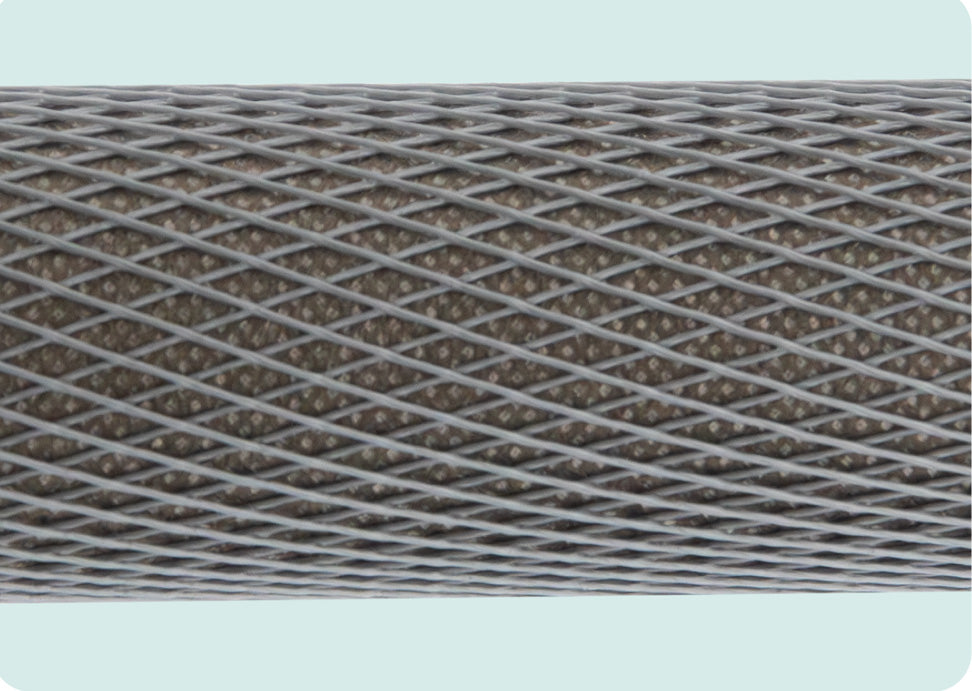
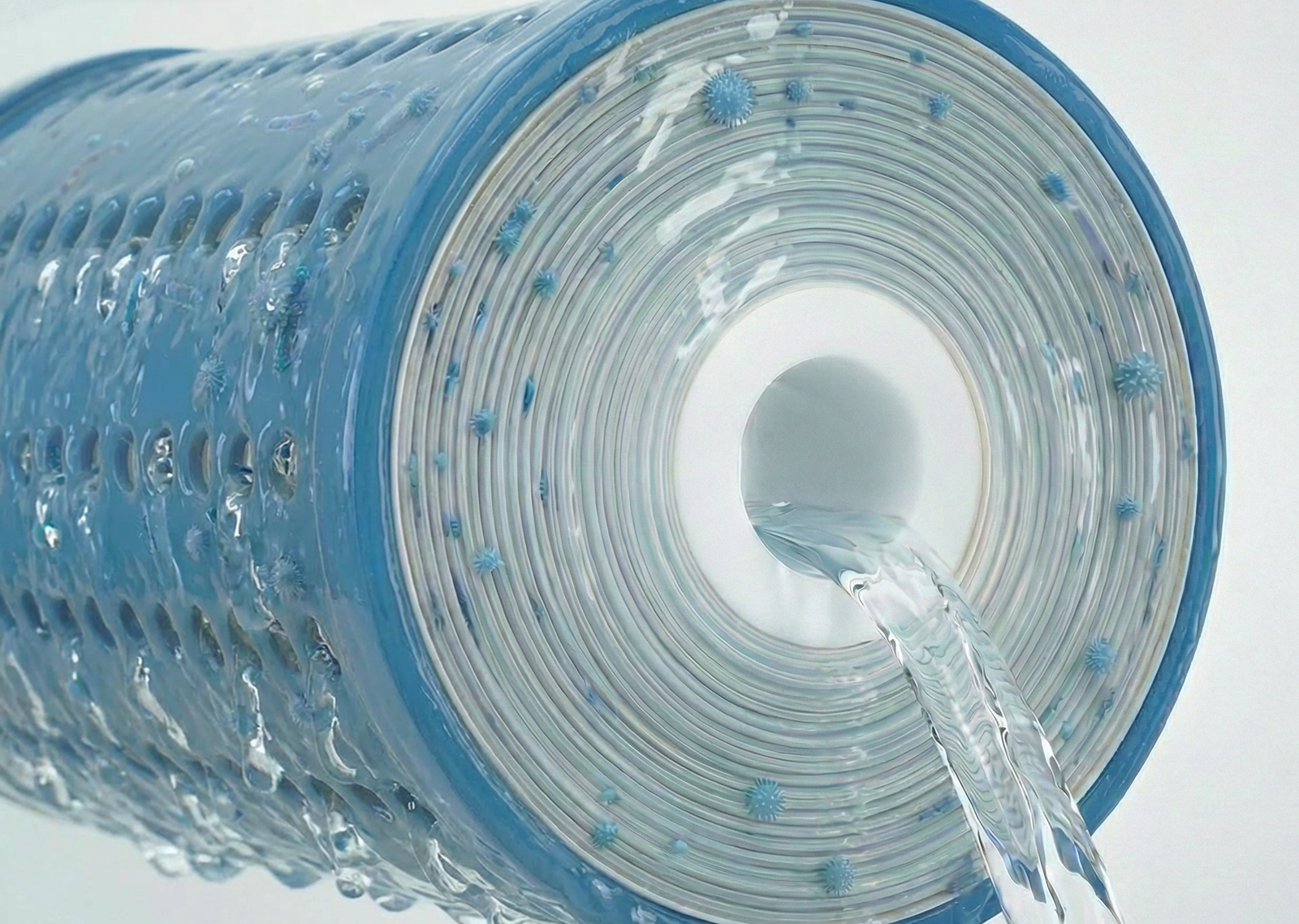
The filter works with a patented ultra-nanomembrane and has been proven to completely remove all known pollutants and limescale from the water. The ultra-nanofiltration used significantly outperforms conventional membrane systems in terms of effectiveness and efficiency.

With a filtration depth of 0.0005 micrometers, Dropvital achieves a level of purity that is decisive in the private household sector. Despite this high performance, the system remains resource-friendly and works with a balanced wastewater ratio of just 1:1.

The filter works with a patented ultra-nanomembrane and has been proven to completely remove all known pollutants and limescale from the water. The ultra-nanofiltration used significantly outperforms conventional membrane systems in terms of effectiveness and efficiency.

With a filtration depth of 0.0005 micrometers, Dropvital achieves a level of purity that is decisive in the private household sector. Despite this high performance, the system remains resource-friendly and works with a balanced wastewater ratio of just 1:1.

Structure of the filter units

Structure of the filter units

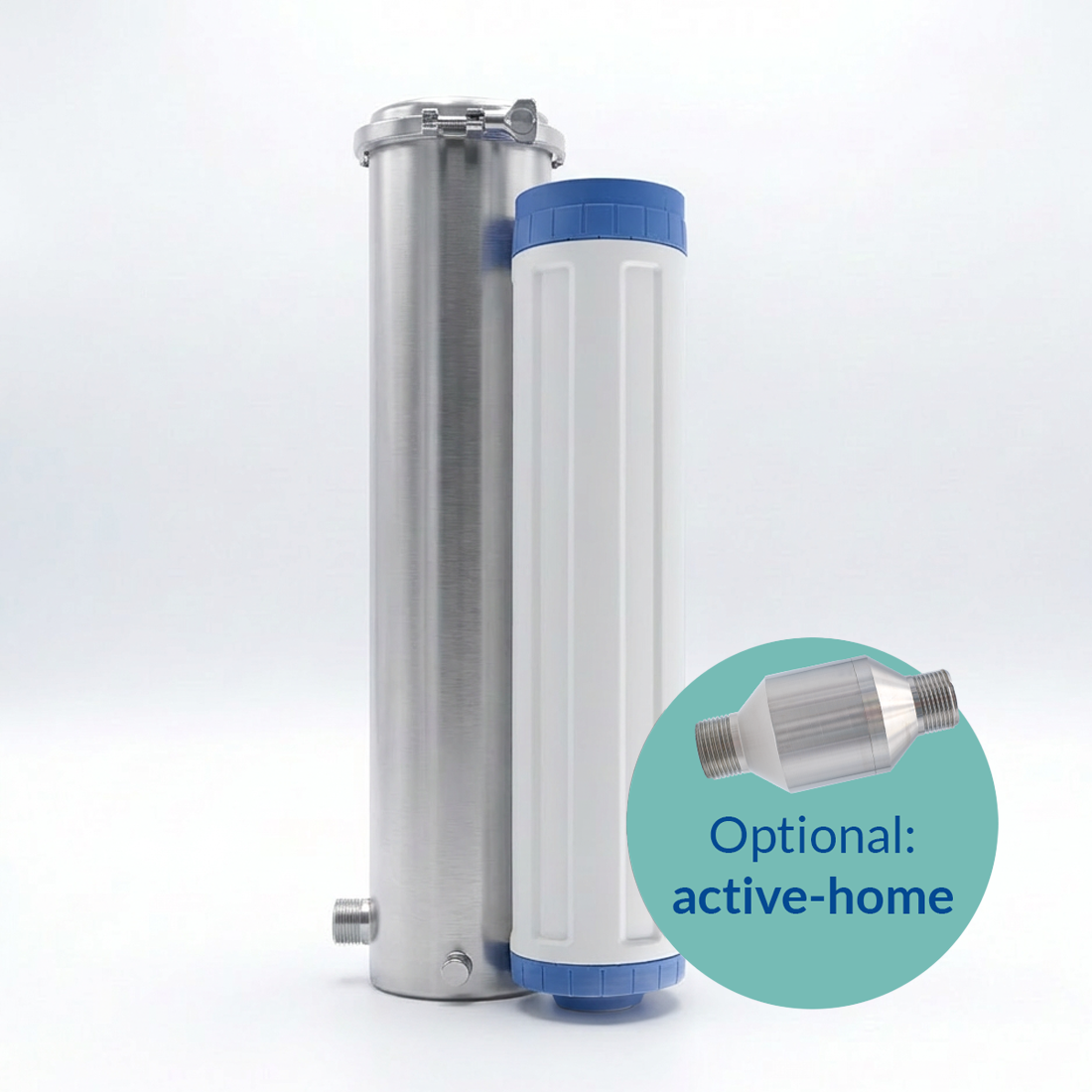
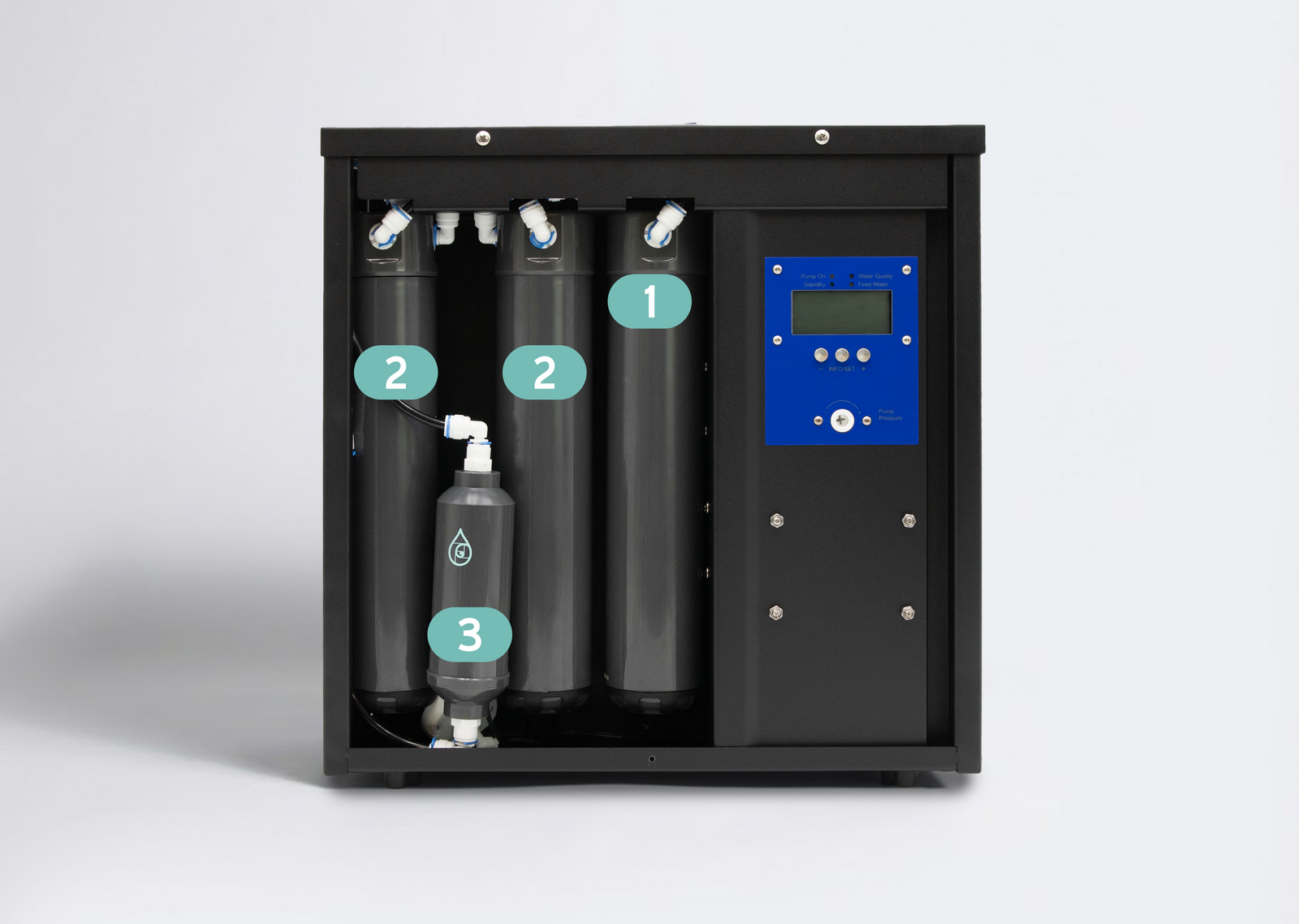
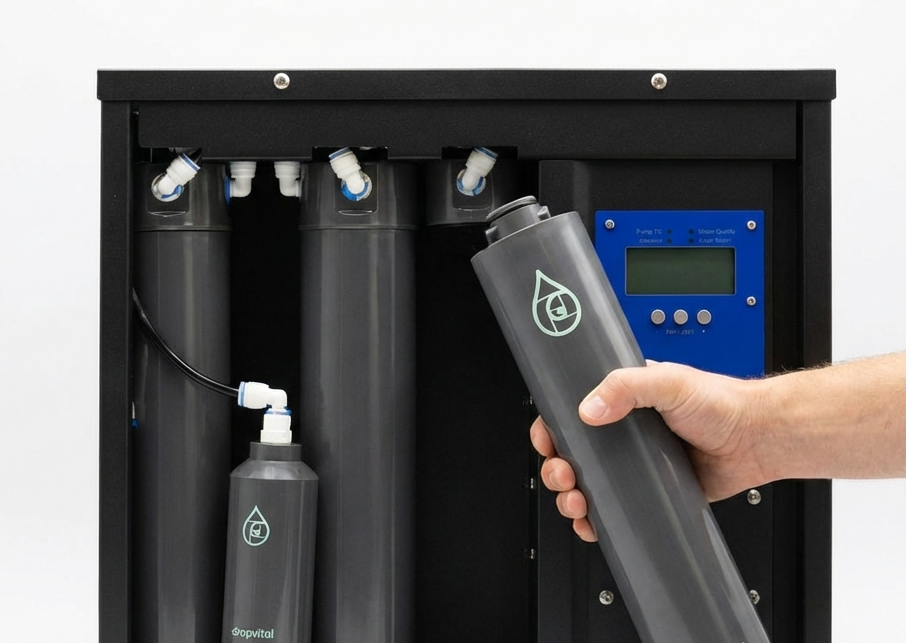
The ultranano-drink is designed with a total of three filtration stages.

  1. Pre-filter
    The pre-filter is based on our innovative active membrane. This can already capture the finest particles down to 0.002 micrometers in the pre-filter and protects the membranes.
  2. Ultra-nano diaphragm
    Our ultra-nano membranes with patented filtration technology ensure the uncompromising elimination of all remaining measurable foreign substances and pollutants.
  3. Germ protection filter
    Thanks to the integrated hygiene barrier, this module ensures a high level of safety and guarantees maximum hygiene.

The ultranano-drink is designed with a total of three filtration stages.

  1. Pre-filter
    The pre-filter is based on our innovative active membrane. This can already capture the finest particles down to 0.002 micrometers in the pre-filter and protects the membranes.
  2. Ultra-nano diaphragm
    Our ultra-nano membranes with patented filtration technology ensure the uncompromising elimination of all remaining measurable foreign substances and pollutants.
  3. Germ protection filter
    Thanks to the integrated hygiene barrier, this module ensures a high level of safety and guarantees maximum hygiene.

Intelligent control mechanisms & high-quality engineering

Intelligent control mechanisms & high-quality engineering

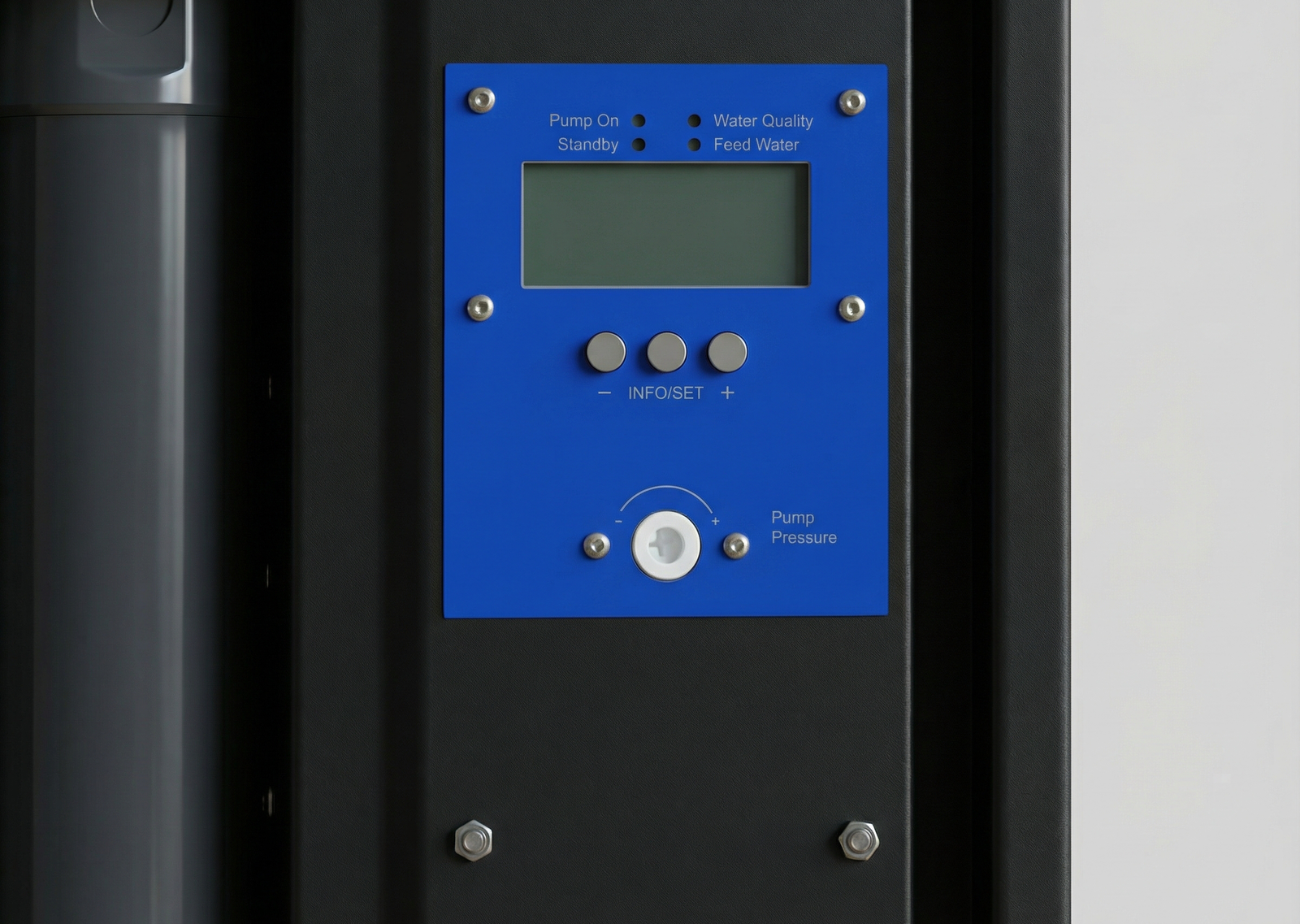
Integrated control mechanisms ensure smooth operation of the appliance and guarantee maximum safety when using the system. The technology is state of the art and stands out with its high-quality engineering.

  • Automatic flushing processes for a high level of safety even during long absences
  • Made from food-compliant and PFAS-free materials
  • Integrated measuring unit for water quality
  • Display unit for error detection
  • Anti-leak sensors

Integrated control mechanisms ensure smooth operation of the appliance and guarantee maximum safety when using the system. The technology is state of the art and stands out with its high-quality engineering.

  • Automatic flushing processes for a high level of safety even during long absences
  • Made from food-compliant and PFAS-free materials
  • Integrated measuring unit for water quality
  • Display unit for error detection
  • Anti-leak sensors

Long service life & easy filter change

Long service life & easy filter change

Compared to conventional membrane systems, the filter modules in the ultranano-drink have an extremely long service life of 10,000 liters or a maximum of 5 years. The filter automatically emits an acoustic signal when the cartridge needs to be changed.

Changing the filter in the ultranano-drink is quick and easy. The filter cartridges can be replaced in a few simple steps without tools, so that the system is immediately ready for use again.

Compared to conventional membrane systems, the filter modules in the ultranano-drink have an extremely long service life of 10,000 liters or a maximum of 5 years. The filter automatically emits an acoustic signal when the cartridge needs to be changed.

Changing the filter in the ultranano-drink is quick and easy. The filter cartridges can be replaced in a few simple steps without tools, so that the system is immediately ready for use again.

Refinement included

Refinement included

The active-drink is already integrated in the ultranano-drink. The patented rotation process refines the filtered drinking water. This causes the water to circulate naturally at up to 3,000 revolutions per minute, which has a positive effect on its structure and ensures a noticeably pleasant drinking sensation with every glass.

  • Noticeably fresh mountain spring taste
  • More oxygen content
  • Purely physical refinement
  • No maintenance required

The active-drink is already integrated in the ultranano-drink. The patented rotation process refines the filtered drinking water. This causes the water to circulate naturally at up to 3,000 revolutions per minute, which has a positive effect on its structure and ensures a noticeably pleasant drinking sensation with every glass.

  • Noticeably fresh mountain spring taste
  • More oxygen content
  • Purely physical refinement
  • No maintenance required

Optionally with hydrogen

Optionally with hydrogen

The ultranano-drink can optionally be extended with the power-drink. This addition makes it possible to enrich the already filtered and refined drinking water with hydrogen. This creates an additional quality level for all those who attach particular importance to their daily drinking water.

  • Addition of molecular hydrogen
  • Tested in over 1,200 independent studies worldwide
  • H2 can bind free radicals

The ultranano-drink can optionally be extended with the power-drink. This addition makes it possible to enrich the already filtered and refined drinking water with hydrogen. This creates an additional quality level for all those who attach particular importance to their daily drinking water.

  • Addition of molecular hydrogen
  • Tested in over 1,200 independent studies worldwide
  • H2 can bind free radicals

Scope of delivery

Scope of delivery

  • 1x ultranano-drink complete system
  • 1x water and accessories (if ordered)
  • 1x waste water clamp
  • 1x active-drink
  • 1x T-piece (incl. stopcock & 3/8" plug connection)
  • 1x 3/8" hoses for the raw water
  • 1x 1/4" hoses for the clean water connection and the waste water connection
  • 1x power cable + power supply unit
  • Various safety clamps (3/8" and 1/4")
  • 1x installation guide
  • 1x maintenance manual

Additional material if power-drink is ordered:

  • 1x power-drink hydrogen generator
  • 1x power cable + power supply unit
  • 2x Y-piece (1/4")
  • 3x angle bracket (1/4")
  • 1x non-return valve (1/4")
  • 1x ultranano-drink complete system
  • 1x water and accessories (if ordered)
  • 1x waste water clamp
  • 1x active-drink
  • 1x T-piece (incl. stopcock & 3/8" plug connection)
  • 1x 3/8" hoses for the raw water
  • 1x 1/4" hoses for the clean water connection and the waste water connection
  • 1x power cable + power supply unit
  • Various safety clamps (3/8" and 1/4")
  • 1x installation guide
  • 1x maintenance manual

Additional material if power-drink is ordered:

  • 1x power-drink hydrogen generator
  • 1x power cable + power supply unit
  • 2x Y-piece (1/4")
  • 3x angle bracket (1/4")
  • 1x non-return valve (1/4")

Downloads

Downloads

Here you will find all relevant product information, technical data and instructions for the products.

Here you will find all relevant product information, technical data and instructions for the products.

  • Information brochure: Drinking water treatment ultranano (PDF)
  • Information brochure: Taps (PDF)

Installation instructions:

Maintenance instructions:

Don't want to install it yourself?

Don't want to install it yourself?

No problem. Our experienced team of certified installers will carry out the professional installation directly at your home. Your system will be ready for use in no time and you can sit back and relax.

No problem. Our experienced team of certified installers will carry out the professional installation directly at your home. Your system will be ready for use in no time and you can sit back and relax.

Frequently asked questions

General questions

Yes, as with any high-quality filter system, the ultranano-drink also requires regular maintenance to ensure a permanently high filter performance.

The filter must be changed after 10,000 liters or after five years at the latest, provided the water hardness is up to 40 °fH. These intervals ensure that filtration remains reliable and constant.

The ultranano-drink automatically informs you when maintenance is due.

After around 10,000 liters of filtered water or after 5 years at the latest, the filter emits an acoustic signal during use.

From this point onwards, maintenance should be carried out within the next few months. This involves replacing the pre-filter, the membranes and the anti-germ filter in order to maintain the filter performance at the intended level.

This ensures that the system works reliably, efficiently and with consistent quality at all times.

Yes, maintenance of the ultranano-drink is very simple and can be carried out easily by yourself.

Thanks to the bayonet lock, the filter can be changed in a few simple steps - the entire process usually takes around two minutes and does not require any special tools.

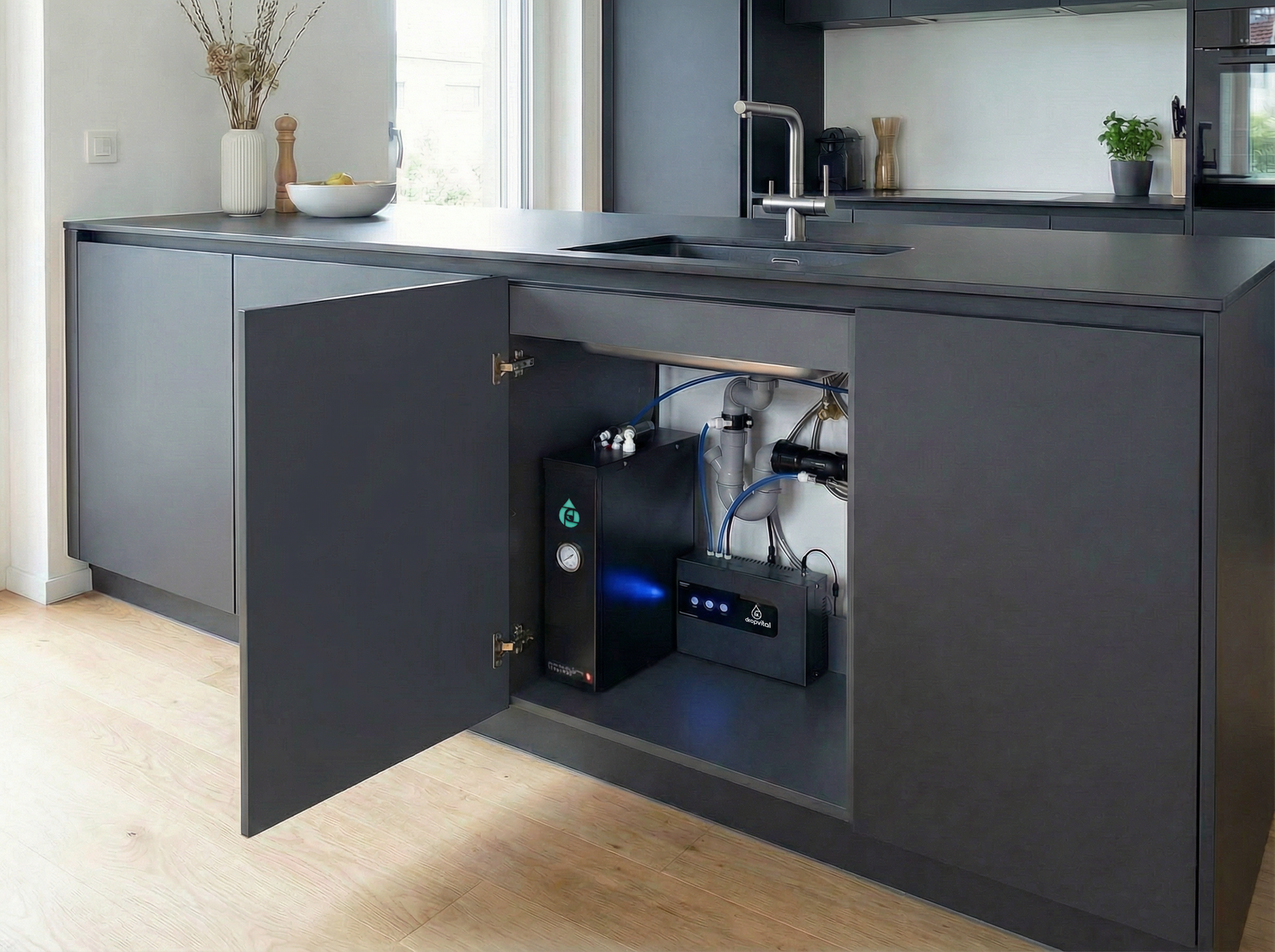
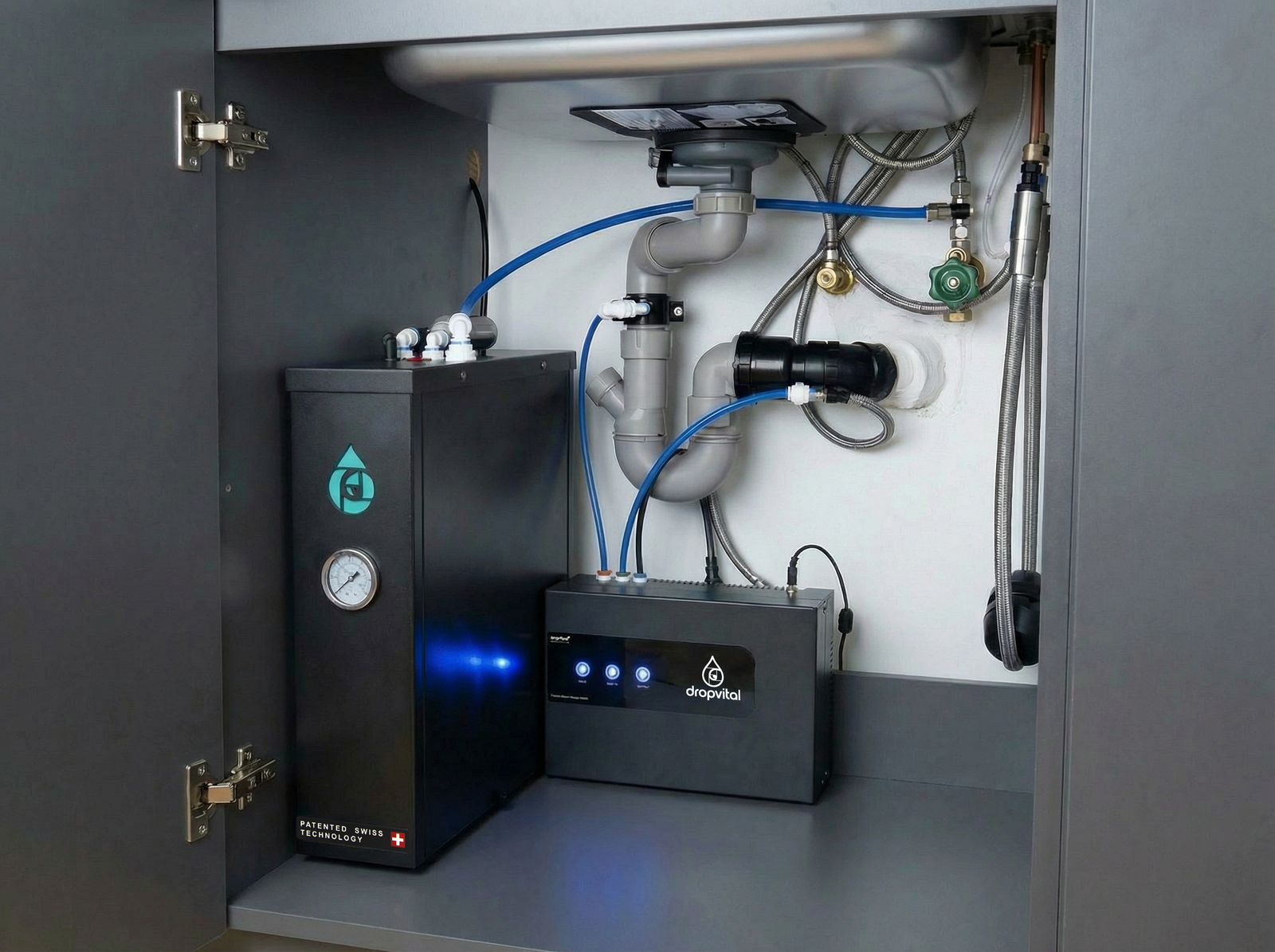
The ultranano-drink systems are installed at any cold water connection (angle valve) in the house - for example in the kitchen, cellar or bathroom.

The systems are not installed directly on the main inlet water pipe of the house, but on a suitable connection in the respective usage unit. This allows for flexible installation, tailored to the local conditions.

For the installation you need:

  • a cold water connection (angle valve) with 3/8 inch external thread
  • a power socket nearby
  • Sufficient space for the filter system
  • a waste water trap or drain connection

This ensures a professional and smooth installation.

Yes, you can also install the systems yourself. It is up to you to decide how the installation is carried out.

However, we recommend installation by a qualified plumbing specialist for optimum and permanently safe operation. This ensures that the connection is carried out professionally and that you also receive an installation guarantee from the company carrying out the work.

We grant a five-year guarantee on the ultranano-drink systems, provided that the devices are installed correctly and used as intended.

On request, the warranty can be extended by a further five years for an additional charge. This means you benefit from a total of up to ten years warranty on your ultranano-drink.

Yes, the ultranano-drink systems are ideal for rental apartments. They can be installed in such a way that no permanent changes to the apartment are necessary and can be dismantled without leaving any residue when moving house.

For rental apartments, however, we recommend a 3-in-1 or 4-in-1 combination tap (cold, hot and filtered water in one tap). This solution does not require an additional drill hole and is particularly elegant. Appropriate taps are available from Dropvital or your plumbing specialist.

Alternatively, the filtered water can also be fed through a small separate tap that is installed in place of a soap dispenser or plug, for example - again without the need for a new hole.

The complete installation kit is included in the scope of delivery. The system can be dismantled and taken away at any time, making it ideal for use in rented apartments.

ultranano-drink

The Dropvital filter is designed to remove over 99% of common and known foreign substances and pollutants from drinking water. The filtration used is one of the deepest in the standard household range and works down to the lower nanometer range.

In independent, accredited Swiss laboratory tests, the Dropvital filter was tested for several hundred defined pollutants. Both the exceptional filtration depth and the targeted removal of PFAS and TFAS compounds were proven.

The demonstrably filtered substance groups include, among others:

  • Pesticides and their degradation products
  • Fungicides and herbicides
  • PFAS and TFAS compounds
  • Residues from medicines and antibiotics
  • Micro- and nanoplastics
  • hormonally active trace substances
  • Chlorine-containing accompanying substances

Filtration takes place down to the nanometer range and is therefore significantly lower than many conventional filter systems. This means that even very small, long-lasting molecules can be captured, which cannot be reliably filtered using conventional activated carbon or carafe filters.

Dropvital's performance specifications are not based on theoretical assumptions, but on specific laboratory analyses under defined test conditions. The actual filter performance remains stable over the intended service life of the cartridge, provided that the recommended maintenance intervals are adhered to.

Many filter systems available on the market operate in the micrometer range and are therefore limited to larger particles. Such systems can reduce the taste of certain substances, but do not achieve the filtration depth required to remove modern trace substances.

Dropvital deliberately relies on high-precision filtration, which enables a measurable and reproducible reduction of over 99% of common and known pollutants - based on tested data instead of blanket advertising claims.

In short

Dropvital offers one of the deepest and most comprehensively tested filtrations in the drinking water sector, removing over 99% of common and known contaminants relevant in modern water analysis.

The ultranano-drink uses Orbital Osmosis, a membrane-based filtration technology in the nanometer range, which is comparable to reverse osmosis in its basic idea. At the same time, Orbital Osmosis differs significantly from classic reverse osmosis systems in several key respects.

Orbital Osmosis is a patented technology, the term itself is protected. The aim of the development was to avoid the known disadvantages of reverse osmosis without losing its filtration depth.

Comparison with classic reverse osmosis

As with reverse osmosis, orbital osmosis also uses a high-precision membrane. However, the difference lies in the way the membrane is used and in the system design.

Classic reverse osmosis systems work with high water pressure. The water is pressed against the membrane, which removes almost all dissolved substances. This process is technically effective, but has several disadvantages:

  • High water consumption (often several liters of wastewater per liter of drinking water)
  • Increased energy requirement
  • Complex maintenance and regular membrane cleaning
  • Limited service life of the membrane

Advantages of Dropvital's orbital osmosis technology

The Dropvital orbital osmosis membrane is designed so that the entire membrane surface is actively used. This achieves a very high filtration depth without forcing the water through the membrane at high pressure.

Independent, accredited Swiss laboratory tests confirm the very high reduction of common and known pollutants. At the same time, the system is water-efficient: only one liter of tap water is needed for one liter of filtered drinking water.

The membrane is also designed for a long service life. Replacement is only planned after around 10,000 liters or after five years at the latest. With an average daily consumption of around six liters, this corresponds to a service life of around four and a half years.

Only food-grade materials are used for drinking water applications. The hoses used meet high standards of hygiene and material purity and come from applications that are also used in sensitive technical areas.

Filtration depth in comparison

The ultranano-drink filters pollutants down to the lower nanometer range. This filtration depth is well below that achieved by many alternative systems.

For comparison:

Treatment processes such as ionizers change the physical properties of the water, but do not represent real filtration. Pollutants largely remain in the water.

Summarized

Orbital Osmosis is not classic reverse osmosis, but an advanced, more efficient form of membrane-based drinking water filtration. It combines a very high filtration depth with low water consumption, a long service life and high suitability for everyday use - without the typical disadvantages of conventional osmosis systems.

In many countries - including Germany and Switzerland - tap water is often described as one of the most strictly monitored foods. This statement is often abbreviated in public discourse and can be misleading.

Courts have pointed out that the term "best controlled food" suggests absolute safety, which is not the case. The legal responsibility of water suppliers generally extends to the house connection. From this point onwards, the water quality can be influenced by in-house pipes, stagnation times, fittings or aerators. Despite high standards, contamination cannot be completely ruled out in the public supply network either.

What is also crucial is what is checked. Tests on tap water - for example as part of the Drinking Water Ordinance - ensure that defined limit values are adhered to. However, they do not prove that tap water is tested more frequently or more comprehensively than other foods, but merely that it meets the legal requirements.

Inspection frequency does not equal quality

The number of checks alone is not a sign of quality. Tap water must be monitored regularly as it comes from groundwater and surface water and is often treated. Other types of water are subject to different regulations and control logics, which also have high requirements, but have a different focus.

Both tap water and other foodstuffs are subject to strict legal requirements, the aim of which is to provide products that are safe for human health. The differences lie less in the level of safety than in the type, timing and scope of the controls.

What does this mean for consumers?

Tap water in Europe is generally safe and of high quality. At the same time, official controls do not necessarily end where the water is actually drunk. The journey from the waterworks to the glass is long - and is influenced by infrastructure, domestic installations and usage habits.

A drinking water filter does not replace the public water supply. However, it can provide an additional level of control directly at the tap and help to keep the water quality constant regardless of external factors.

Conclusion

Food in Europe is subject to high safety standards. However, the statement that tap water is the "best controlled food" is more of a simplistic advertising slogan than an objective description of the facts. The decisive factor is not the name, but the quality of the water where it is consumed.

Dropvital therefore does not see itself as a criticism of the public water supply, but as a complementary solution for anyone who wants additional transparency, control and consistent water quality.

Tap water in Europe is generally safe and subject to legal controls. However, these checks are mainly carried out at the waterworks or up to the house connection - not necessarily where the water is actually consumed: at the tap.

On the way from the waterworks to the glass, the water quality can be influenced by in-house pipes, fittings, stagnation times or deposits. The often quoted statement that tap water is the "best controlled foodstuff" therefore falls short and does not describe the actual situation at the point of use.

In addition, drinking water analyses are based on defined, known parameters. Trace substances, new chemical compounds or substances without defined limit values are not recorded across the board. Even residues from agriculture, industry or medicine cannot always be completely monitored or removed by technical means.

Another aspect is the in-house infrastructure. Materials such as copper, old metal pipes or mineral deposits can have an additional impact on water quality over the last few meters. This so-called "last mile" is beyond the control of the water supplier.

The ultranano-drink does not replace the public water supply. However, the system offers an additional, independent filtration stage directly at the tap. This means that the water is filtered where it is actually used - regardless of the length of the pipe, domestic installation or regional differences.

Conclusion

We live in an environment in which air, food and water pollution are omnipresent. Ultra Nano Drink is a complementary solution for improving and maintaining the quality of drinking water in everyday life - for everyone who wants to consume their water in a conscious and controlled manner.

Mineral water is often perceived as a high-quality alternative to tap water. Nevertheless, there are some aspects that should be considered when deciding between bottled water and a modern filter system.

Regulatory framework

Mineral water is subject to its own legal regulations, which differ from those for tap water. The requirements focus primarily on the original purity at the source. Tap water, on the other hand, is continuously monitored and tested for a large number of defined parameters. Both systems offer safety, but take different approaches.

Packaging and environmental aspects

A large proportion of mineral water is bottled in plastic bottles. These not only cause waste, but can also - depending on storage and material - release accompanying substances into the water. Although glass bottles are an alternative, they require more energy and CO₂ due to production, transportation and recycling.

Suitability for everyday use and comfort

With the ultranano-drink, filtered drinking water is available directly from the tap at all times. This eliminates the need to regularly buy, transport and store bottles. This offers a significant gain in convenience, especially in everyday life.

Costs and sustainability

A filter system is often more cost-efficient in the long term than buying mineral water on an ongoing basis. At the same time, packaging waste is significantly reduced, making ultranano-drink a resource-saving alternative.

Minerals are essential for the human body. However, it is not only the quantity that is crucial, but above all the form in which minerals are absorbed.

Mineral intake: water or food?

Minerals such as calcium and magnesium are found in varying concentrations in drinking and mineral water. However, scientific studies show that the majority of minerals are supplied by solid foods. Foods such as vegetables, fruit, nuts and wholegrain products provide minerals in an organically bound, readily bioavailable form.

Water primarily fulfills another task: it serves to supply fluids, transport substances in the body and regulate physiological processes.

Organically vs. inorganically bound minerals

Minerals from food are usually bound to organic structures, which facilitates their absorption. In drinking water, minerals are usually present in inorganic form. Although these are absorbed by the body, they are not utilized to the same extent and excess amounts have to be excreted via the kidneys.

For this reason, water is not considered a primary source of minerals in nutritional science, but rather an accompanying medium that supports the metabolism.

What does this mean for filtered water?

Dropvital filter systems are designed to reduce undesirable accompanying substances while trace elements remain in the water. As a result, the water is not "distilled" and does not lose its natural composition, but remains as drinking water in the physiological sense.

Ultra-nanofiltered water is clearly different from distilled water. It still contains small amounts of dissolved trace elements and is suitable for daily hydration.

Classification from a scientific perspective

International organizations such as the WHO point out that there are no proven health benefits of mineral-rich water. Likewise, there is no reliable evidence that low-mineral water has any negative effects on a balanced diet.

A varied diet generally provides the body with all the minerals it needs. Water can therefore concentrate on its central function: Hydration and support of physiological processes.

Minerals are essential for the human body. However, the crucial question is what contribution drinking water actually makes to the daily supply of minerals.

On behalf of Forum Trinkwasser e. V., scientists from the University of Paderborn, led by Professor Helmut Heseker, investigated the nutritional significance of drinking water for the supply of minerals. The results show that drinking water only makes a limited contribution to covering our daily mineral requirements.

With an average consumption of around two liters of drinking water per day, the contribution to the recommended daily intake for calcium and magnesium, for example, is in the low single-digit percentage range. Many trace elements are either only contained in drinking water in very small quantities or are hardly relevant for the body via this route.

The study comes to the conclusion that the main supply of minerals comes from solid foods - in particular from foods in which minerals are present in a biologically readily available, organically bound form.

From a nutritional point of view, water therefore primarily fulfills a different function: it serves to supply fluids, transport substances in the body and support physiological processes.

What does this mean for filtered water?

Dropvital filter systems are designed to reduce unwanted contaminants without completely demineralizing the water. Trace elements remain in the water, while filtration is geared towards constant and controlled water quality.

Filtered water does not replace a balanced diet - rather, it supports a high-quality and well-tolerated fluid intake in everyday life.

Summarized

Minerals are important, but are mainly absorbed through food. Drinking water only makes a limited contribution to this. Dropvital therefore sees filtration as a supplement to using water as a neutral, clean and reliable medium in everyday life.

The scientific literature shows that there is no uniform, generally recognized target value for the mineral content of drinking water. Instead, numerous studies deal with the question of what role minerals in water play in comparison to total dietary intake and how different mineral concentrations should be classified physiologically.

Several independent studies have focused in particular on calcium and magnesium in drinking water:

  • Nerbrand et al. (2003) investigated correlations between calcium and magnesium levels in drinking water and cardiovascular risk factors. The study shows that the interpretation of such correlations is complex and cannot be considered in isolation. The authors point out that minerals in drinking water are only one of many influencing factors.
  • Morr et al. (2006) analyzed calcium concentrations in bottled and tap water and found a wide range. In certain regions with a high life expectancy, comparatively low calcium levels were observed in drinking water. However, the study emphasizes that such observations do not allow any causal conclusions to be drawn.
  • Druzhyak (2005) describes drinking water resources in regions with low water hardness and discusses possible correlations with lifestyle and environmental factors. Here, too, it becomes clear that the mineral content of water is only one aspect of a complex overall system.
  • Siener et al. (2004) and Bellizzi et al. (1998) investigated the influence of mineral-rich water on urine composition. The studies show that high mineral concentrations in water can have physiological effects that can be assessed differently depending on the individual situation

Scientific classification

From today's perspective, there is no scientific consensus that a high mineral content in drinking water is fundamentally beneficial. Similarly, there is no generally valid recommendation to use drinking water specifically as a source of minerals.

In fact, numerous studies indicate that the main supply of minerals comes from the diet. Drinking water is primarily used for hydration, while minerals are mainly absorbed from food in a biologically readily available form.

Water as a central element of the body

The human body consists largely of water. This proportion varies depending on the stage of life: it is particularly high in infants and significantly more than half of body weight in adults. These figures illustrate the central role that water plays in basic bodily processes.

Water is also an omnipresent component in nature. Plants, soils and even solid materials contain bound water. For living systems, water is therefore not a by-product, but a fundamental requirement.

Functions of water in the body

Water fulfills several essential tasks in the human organism:

  • it serves as a transport and solvent
  • it supports the heat balance and temperature equalization
  • it acts as a buffer and protective medium
  • it enables the elimination of metabolic products

A large part of these processes is dependent on a sufficient and regular supply of fluids.

Water quality and metabolic processes

The kidneys process a large volume of fluid every day to keep the metabolism in balance. Substances that the body does not need are excreted, while important components are retained.

The quality of the water consumed can influence which additional substances are supplied to the body. For this reason, not only the quantity but also the composition of the water plays a role.

Minerals in water - a question of classification

Minerals are essential for life. However, there is widespread agreement in nutritional science that the main source of minerals is food. Food usually provides minerals in an organically bound form that can be easily utilized by the body.

Minerals in drinking water are mainly present in inorganic form. These only make a limited contribution to the daily supply of minerals and do not fulfill a main nutritional function in water. Water serves primarily as a fluid carrier, not as a source of nutrients.

What does this mean for modern drinking water?

High-quality drinking water should first and foremost:

  • be free from undesirable accompanying substances
  • have a constant composition
  • reliably supply the body with fluids

The individual mineral requirement is covered by a balanced diet. This allows water to concentrate on its central task: Hydration and supporting physiological processes.

Classification for filtered water

Dropvital filter systems are designed to reduce unwanted substances without completely demineralizing water. Trace elements are retained in small quantities, while the focus is on purity, stability and suitability for everyday use.

Dropvital does not make any medical or therapeutic claims. Filtration is a technical solution for providing water of consistent quality.

Conclusion

Water is essential for the human body. Its most important function is to supply us with fluids, not minerals. Conscious water quality can help to use water as a neutral, reliable medium in everyday life - in addition to a balanced diet.

Ionizers are used to change the pH value of water and shift it into an alkaline or acidic range. This is a water treatment, not a classic filtration process.

Change in pH value

Ionizers influence the pH value of the water. However, the human body has its own regulatory mechanisms for the acid-base balance. Changing the pH value of drinking water does not replace these natural processes.

Filtration of pollutants

Most ionizers are not designed to specifically remove pollutants. Simple pre-filters or activated carbon elements are often used, which can only reduce larger particles or certain substances. Many dissolved contaminants such as micropollutants, persistent chemicals or microplastics remain in the water.

Scientific classification

To date, there is no uniform scientific consensus on the specific health benefits of ionized water. The decisive factor for water quality is not so much the pH value, but the absence of undesirable accompanying substances.

Security and system selection

When choosing a water treatment system, it makes sense to rely on technologies whose filter performance has been independently tested and which have been proven to remove certain impurities. Systems with clearly defined filtration offer better comparability here.

Summarized

Ionizers change the properties of the water, but do not provide full filtration. Anyone who values the targeted reduction of pollutants should rely on filter systems that are designed and tested precisely for this purpose.

Reverse osmosis systems are often advertised as having extremely small pore sizes, around 0.1 nanometers (0.0001 micrometers). However, this information can easily lead to misunderstandings as it does not describe how reverse osmosis membranes actually work.

Reverse osmosis membranes do not have open pores, as known from classic filters or sieves. The active separation layer consists of a dense polymer film (usually polyamide) which is applied to a stabilizing carrier layer. This active layer is amorphous and non-porous in the classic sense.

Water is therefore not transported through pores, but via the so-called solution-diffusion mechanism. Water molecules dissolve in the polymer structure of the membrane, diffuse through the material and emerge on the other side. Larger or chemically unsuitable molecules are retained in the process.

For comparison:

A single water molecule has an effective diameter of around 0.27 nanometers. If a membrane actually had solid pores of only 0.1 nanometers, even water could not pass through them. Such a membrane would have no physical function for water filtration.

The often quoted figure of "0.1 nanometers" is therefore not a real measured pore value, but a simplified, mathematical approximation derived from the retention rates of certain substances. It does not describe the actual structure of the membrane.

How does Dropvital communicate filtration correctly?

We attach great importance to technically reliable and comprehensible information. Instead of theoretical pore values, the effective selectivity of the membrane is specified. This is in the lower nanometer range and is based on:

  • the real material structure
  • known molecular sizes
  • Measurements and independent tests

We are not describing a theoretical marketing concept, but the actual physical performance of the membrane technology used.

Summarized

  • Reverse osmosis membranes do not have classic pores
  • Statements such as "0.1 nanometer pore size" are simplified marketing values
  • Real filtration is based on solution diffusion, not on the sieve effect
  • Dropvital deliberately communicates scientifically based, realistic values

The ultranano-drink works from the very first moment. However, for optimum filter performance, we recommend allowing the water to flow briefly.

After a standing time of more than one week, the membrane structure may relax slightly due to the lack of water pressure. This well-known physical phenomenon is known as the TDS effect. During this phase, filtration may not reach its optimum level for a short time.

For this reason we recommend:

  • after normal operation: pre-rinse for approx. 30 seconds
  • after a longer standing time (over a week): Pre-rinse for approx. 1 minute

After this short pre-rinse time, the system works again with full, stable filter performance.

The pre-rinse water does not have to be discarded and can easily be used for watering plants or other household purposes.

When developing the ultranano-drink, particular emphasis was placed on hygiene and long-term stability. Several technical measures help to prevent germs from colonizing or multiplying in the system.

The system carries out automatic flushing cycles at regular intervals to prevent stagnant water and reduce deposits. These flushing intervals exceed the usual recommendations in practice and support constant system hygiene.

The membrane technology used works in the nanometer range. Due to its structure, bacteria cannot pass through the membrane. At the same time, the even flow across the entire membrane surface ensures that deposits and local contamination are minimized.

A separate bacteria and virus filter is integrated into the system as an additional hygienic safety stage. This filter stage serves to hygienically stabilize the water after membrane filtration. The filtration performance of this safety stage has been examined and documented in independent tests by the internationally recognized testing institute SGS.

In addition, materials suitable for drinking water are used throughout the system, the surfaces of which are designed to make it difficult for biofilms to accumulate. This reduces the risk of microbial contamination, even in long-term operation.

The pH value describes whether a liquid is acidic, neutral or alkaline. Drinking water is naturally in the slightly acidic to neutral range, which is completely normal from a technical and sensory point of view.

The filtered water of the ultranano-drink typically has a pH value of around 6.5 to 7.0 when measured. This range also corresponds to the pH spectrum of many natural foods.

A basic classification is important here:

The measured pH value of a drink says nothing about how it is processed in the body. The human acid-base balance is regulated by complex metabolic processes and is not directly determined by the pH value of individual foods.

A frequently cited example is lemon juice. It has a clearly acidic pH value, but is processed differently in the metabolism than its taste or measured value would suggest. This example shows that the pH value of a food is not a reliable indicator of its physiological classification.

Many fruits and vegetables also have pH values between around 5.5 and 7.5, without this affecting their quality or digestibility.

Systems for the production of so-called alkaline water usually change the pH value of the water by adding inorganic minerals or through electrolytic processes. This technically increases the alkalinity of the water. This change is often advertised as having health benefits, but is controversial from a physiological point of view.

The human organism is not dependent on alkaline drinking water. The stomach in particular consciously works in a highly acidic environment with a pH value of around 1.5 to 2. This acidity is essential for digestion, the defense against germs and the utilization of nutrients. If alkaline liquids regularly enter the stomach, the body does not react by relieving itself, but by increasing acid production to compensate.

It is important to make a clear distinction from natural foods. Alkaline water with pH values above 8 and added inorganic minerals is not comparable to fresh fruit or vegetables. Plant-based foods contain organically bound minerals and typically lie in a pH range between around 5.5 and a maximum of 7. Their effect on the metabolism follows completely different biochemical mechanisms.

Scientific classification

The benefits of alkaline water are not uniformly assessed by experts. To date, there are no reliable long-term studies that prove a sustainable health benefit from permanently increased drinking water pH. The human acid-base balance is primarily regulated by the lungs, kidneys and complex buffer systems. Drinking water only plays a subordinate role here.

It is known that water with a high calcium or magnesium content can have a higher pH value under certain conditions. However, no medical benefit can be derived from this. Whether such a change makes sense depends not on marketing claims but on physiological necessity, and this is not usually the case in healthy people.

Criticism of electrolytic water separation

The electrolytic splitting of water into an acidic and an alkaline component is viewed critically by many experts. This artificial polarization corresponds neither to the natural composition of drinking water nor to the requirements of human physiology. There is no scientific evidence of added health benefits.

Classification of the filter technology at Dropvital

Regardless of the pH value, the reduction of pollutants in drinking water makes sense. High-quality filter systems can reduce contaminants such as PFAS, heavy metals, pesticides or drug residues and thus objectively improve water quality. From Dropvital's point of view, the focus is therefore not on pH manipulation, but on the purity, safety and compatibility of the water.

A water filter can be useful. From today's scientific point of view, however, targeted alkalization or electrolytic splitting of the water is not necessary.

Professional perspective

Critical voices from medicine and engineering have been pointing out for years that simplified concepts such as "alkalizing" the body do not do justice to the complexity of human physiology. The organism regulates itself with great precision. External interventions using alkalized water are neither necessary nor proven to be effective.

Recommendation

Dropvital recommends choosing a drinking water system based on comprehensible criteria: Reduction of harmful substances, material quality, hygiene and scientific evidence. Statements on the general alkalization of the body should be critically questioned. Clean water is crucial. An artificially increased pH value is not.

active-drink

Dropvital active-drink is a drinking water that is set in a dynamic rotational motion by means of physical water refinement. A natural stream is technically imitated over a distance of around 30 kilometers. This process is based on known hydrodynamic principles as they occur in free-flowing waters.

The targeted rotation and flow control gives the water a pronounced flow dynamic. The chemical composition of the water remains completely unchanged. No minerals are added and the pH value, hardness or other chemical parameters are not affected.

Technological approach

Physical refinement takes place via a precisely controlled flow system in which the water is set in rotation at high speed. This process creates a uniform, coherent movement of the water, which is maintained for a certain period of time after bottling, provided there is no further strong turbulence.

In contrast to static methods or symbolic applications, Dropvital active-drink is based on active flow dynamics. The simulation of a natural flow path serves the technically reproducible generation of kinetic energy and flow order in the water.

Classification of perception

Many people describe Dropvital active-drink as particularly fresh, light and lively in the mouth. This perception is subjective and varies from person to person. It does not represent a statement about health effects, but relates exclusively to sensory properties and the physical flow behavior of the water.

Clear demarcation

Dropvital active-drink is not a medical product or a dietary supplement. No healing effects, therapeutic effects or health promises are made. Statements about the naturalness or activity of the water refer exclusively to physical properties such as flow, movement and dynamics.

Positioning

Dropvital active-drink is aimed at people who value high-quality water, modern engineering technology and nature-inspired refinement. The focus is on purity, design, sensory experience and a new way of consciously experiencing water without chemical intervention or medical claims.

Modern scientific research shows that water is not a static medium. Water molecules are in constant exchange via hydrogen bonds and are constantly reorganizing themselves. These temporary molecular arrangements are often described in the specialist literature as clusters or networks.

This dynamic is not a special case, but a central characteristic of water. It influences fundamental physical properties such as flow behavior, solubility and reaction dynamics.

Scientific background

Investigations using spectroscopic methods and molecular dynamic simulations confirm that water is a highly ordered, yet extremely mobile system. The clusters described are not fixed structures, but snapshots within a continuous process.

It is precisely this permanent reorganization that makes water a unique medium and explains why movement, flow and energy input can measurably influence the behaviour of water.

Classification of Active Nanodrink

Dropvital Active Nanodrink takes up this scientific understanding and deliberately focuses on physical processes. Controlled movement and flow dynamics put the water into an active, living state that is clearly different from still, static water.

The term "nano" refers to processes in the molecular and physical size range and does not describe any chemical change or addition of substances. The chemical composition of the water remains unchanged.

Clear demarcation

Dropvital Active Nanodrink is not a medical product or a dietary supplement. No healing or therapeutic effects are promised. Statements on the activity or vitality of the water refer exclusively to physical properties such as movement, structure and dynamics as well as sensory perceptions, which may vary from person to person.

Positioning

Active Nanodrink is aimed at people who want to experience water not just as a neutral drink, but as a consciously designed element of their everyday life. The focus is on purity, modern technology, nature-inspired processes and a high-quality drinking experience.

Pioneering work: Warner (1970)

In his seminal article "Structured Water in Biological Systems" (Annual Reports in Medicinal Chemistry), Warner showed that water in biological systems adopts ordered patterns. These patterns interact directly with biomolecular processes and underscore how central this organization is to living systems. 

Fundamental models: Frank (1970)

Another groundbreaking paper in Science analyzed the molecular structure of water and showed how water molecules can organize themselves into dynamic, structural networks. Frank thus laid the foundation for understanding the multidimensionality of water as a chemical and physical medium. 

Structural networks: Neidle et al. (1980)

This paper in Nature demonstrated highly structured water networks in DNA-dinucleoside complexes. These networks reveal how water interacts with biological macromolecules at the molecular level and supports their stability and functionality. 

Specific molecular clusters: Kristinailyte et al. (2017)

Using NMR and FTIR techniques, this study in the Journal of Molecular Liquids investigated the clustering of water molecules. It showed that water forms nanoscale structures that change dynamically under different conditions and exhibit specific properties. 

Response to electromagnetic fields: Montagnier et al. (2015)

Nobel Prize winner Luc Montagnier and colleagues have shown that water has the ability to receive electromagnetic signals and store them in specific molecular organizations. These findings expand our understanding of the active role of water in biological processes. 

Interactions due to external stimuli: Gramatikov et al. (1992)

The Fresenius Journal of Analytical Chemistry has investigated how external factors such as temperature or chemical changes influence the molecular organization of water. These studies prove that water actively reacts to environmental conditions and dynamically adapts its molecular structure. 

Networks and non-polar substances: Muller (1988)

A study in the Journal of Solution Chemistry has shown how water organizes itself around non-polar molecules. These observations illustrate the complexity of the molecular interactions of water. 

Quantum effects in water: Del Giudice et al. (2005)

The authors introduced a model of coherent quantum electrodynamics in Electromagnetic Biology and Medicine. They showed that the molecular organization of water is shaped not only by classical mechanisms such as hydrogen bonds, but also by quantum physical phenomena. 

Surface interactions: Tarov et al. (2005)

This work showed how hydrophobic and hydrophilic surfaces influence the molecular structure of water. The authors documented that water in contact with such surfaces forms ordered layers that are unique in their function. 

Electrical properties: Tychinsky (2011)

A comprehensive analysis in the Water Journal has shown that water molecules in specific organizations have an exceptionally high electrical susceptibility, which indicates an extended molecular order.  

Spectral signatures: Segarra-Martí et al. (2013)

This study in Molecular Physics showed that molecular water organization produces specific absorption and fluorescence spectra that serve as molecular "fingerprints". This indicates the precision of structural dynamics in water.

Supramolecular architectures: Elia et al. (2016)

Through targeted external stimulation, these authors created supramolecular architectures in water in the Water Journal. These structures exhibit a high degree of stability and complexity that goes far beyond simple molecular bonds. 

Hydrogen-rich water clusters: Ignatov et al. (2024)

A recent study in Water investigates cluster formation in hydrogen-rich water (HRW) using NMR and DFT analyses. The results show the formation of stable cluster structures that further substantiate the molecular dynamics and potential medical applications of structured water.

Source for all studies cited:

 (Source: PDF "structured water)

Hydrogen bonds are a central component of the structure of water and explain many of its known properties. However, modern research shows that they interact with other physical interactions and thus enable the special dynamics and complexity of water.

In addition to hydrogen bonds, the following influences are also considered in science:

Van der Waals interactions

These weak intermolecular forces contribute to the short-term stabilization of molecular arrangements and influence the spatial orientation of water molecules. They are a recognized component of physico-chemical models for the description of collective effects in liquids.

Quantum physics approaches

Some theoretical works, including models by Del Giudice and colleagues, investigate quantum physical effects as a complementary description of the molecular dynamics of water. These approaches extend classical models and are seen as part of an ongoing scientific discourse.

Electromagnetic influences

Research is also being carried out into how electromagnetic fields can influence the organization of water molecules. Such studies help to view water not only as a chemical substance, but also as a physically reactive medium.

Surface interactions

It is well established that hydrophilic and hydrophobic surfaces locally change the arrangement of water molecules. Ordered structures are created in interface areas that differ measurably from freely moving water and are relevant for many natural and technical processes.

Classification and significance

The research work mentioned is based on recognized experimental methods such as spectroscopy, model calculations and surface analyses. They unanimously show that water is a dynamically organized system whose properties arise from the interplay of several physical forces.

This multidimensional view expands the scientific understanding of water and explains why it plays a special role in biological, chemical and technological contexts. It describes the adaptability and functionality of water without deriving medical or therapeutic statements from it.

The growing interest in so-called structured water is based on the increasing awareness of how central water is to biological processes. The human body is largely made up of water, and a significant proportion of this is found within cells. In these highly organized environments, water is not isolated but part of complex molecular interactions.

This observation gave rise to the idea that water could play a role not only chemically, but also in its physical organization. Terms such as structured, hexagonal or H3O2 water are used to describe this particular way of looking at water.

Conceptual basis of the concept

Proponents of structured water concepts assume that water molecules temporarily organize themselves in ordered arrangements and that movement, pressure, contact with surfaces or natural flow can influence this organization. These considerations are based on known physical properties of water, such as its dynamics, adaptability and responsiveness to environmental conditions.

Connection to nature and spring water

Structured water is often compared to natural spring water. Water that flows over long distances, comes into contact with rocks and is exposed to natural currents is often perceived as particularly fresh and lively. Such comparisons serve to illustrate natural processes in which movement and environmental influences shape the behavior of water.

This awareness has contributed to many people taking a closer look at the quality and origin of their drinking water.

Popular interpretations and modern lifestyles

The term structured water has also been taken up in the context of modern lifestyles, holistic approaches and alternative ways of thinking. The focus here is less on a medical effect and more on the conscious experience of water as an elementary part of everyday life. Statements on detoxification, cell health or performance enhancement primarily reflect individual convictions and are scientifically evaluated in different ways.

Classification by Dropvital

Dropvital approaches the topic of structured water with an open but responsible attitude. The focus is on physical properties such as movement, dynamics and purity of the water as well as on high-quality, comprehensible refinement processes. Dropvital makes no claims about medical or therapeutic effects and understands terms such as structure or activity as descriptions of physical states and sensory perceptions.

Source:
Max Planck Institute (PDF)

Modern science describes water in biological systems not as a random collection of individual molecules, but as a dynamic, locally organized medium. Within human cells in particular, water in the immediate vicinity of biomolecules exhibits specific orders that are important for normal biological processes.

Ordered water layers in cells

In cells, water forms so-called hydration layers around proteins, DNA and other large biomolecules. These water molecules are spatially and energetically organized differently than freely moving water. Such structures are a well-studied component of biochemistry and support the stability, function and interaction of biomolecular systems, for example in enzyme reactions or the structural organization of cell components.

Classification of modern research approaches

Some research approaches, including the concept of so-called exclusion zone water, investigate how water organizes itself in particular ways near surfaces or interfaces. These models provide exciting insights into the physical properties of water in complex environments and are being researched and discussed internationally. They contribute to the further development of our understanding of water as an active component of biological systems.

Importance of dynamics

Water in cells is characterized by its high mobility and adaptability. Ordered water layers are not rigid, but change continuously depending on their environment. It is precisely this dynamism that enables biological systems to react flexibly to different requirements and control processes efficiently.

Positive classification

Scientific findings show that water plays a far more complex role in biological systems than has long been assumed. Its ability to organize itself locally while remaining highly dynamic makes water a central element of life. This view emphasizes the special significance of water, without deriving any medical or therapeutic conclusions from it.

Classification at Dropvital

Dropvital takes up this modern understanding of water as a dynamic and adaptable system. Terms such as structure or organization are understood as descriptions of physical states and natural processes. Dropvital makes no claims about healing effects or health benefits and deliberately focuses on transparency and scientific accuracy.

Summary

Research shows that water in human cells is both locally organized and highly dynamic. These properties support fundamental biological processes and illustrate how versatile water is as a medium. In this sense, Dropvital understands water as a fascinating, living system whose complexity is becoming increasingly better understood scientifically.

UV light is often used in water treatment to reduce microorganisms. This is an established process for the hygienic protection of water. At the same time, UV treatment is limited to this purpose and does not change the chemical composition or physical dynamics of the water.

Dropvital takes a deliberately different approach with active-drink. The focus is not on treating the water with high-energy radiation, but on gentle, physical refinement based on natural movement and flow processes.

Focus on movement and dynamics

active-drink is based on the idea that water is not a static medium, but a dynamic system. Targeted physical processes set the water in an active, uniform motion. The chemical composition of the water remains completely unchanged. No substances are added or removed.

This approach is based on natural flow processes as they occur in freely moving water and aims to shape the physical properties of the water in a particularly gentle way.

Radiation-free approach

Dropvital deliberately avoids UV radiation when refining active-drink. This avoids high-energy interventions that go beyond pure hygiene. Instead, Dropvital relies on comprehensible, reproducible physical principles such as movement, flow and contact time.

Classification of scientific concepts

Research is increasingly describing water as a complex, reactive system whose properties depend heavily on movement and the environment. These findings form the conceptual background of active-drink. However, Dropvital does not derive any medical or therapeutic statements from this.

Clear demarcation

active-drink is not a medical product or a dietary supplement. No statements are made about effects on cells, DNA, the immune system or diseases. Statements on quality, activity or naturalness refer exclusively to physical properties and the sensory perception of the water.

Summary

Dropvital active-drink stands for modern, radiation-free water refinement that relies on physical movement instead of irradiation. The focus is on purity, dynamism and a conscious approach to water - clear, transparent and without any medical claims.

No. The active-drink is completely service and maintenance-free if installed correctly. If it is integrated into the cold water system and operated in accordance with a suitable filter system, neither regular maintenance work nor replacement is required.

The active-drink works purely physically, contains no wearing parts and requires no consumables. As a result, the function is permanently maintained without the need for ongoing intervention.

The physical refinement in active-drink causes the water to move intensively and evenly. This dynamic increases the mixing of the water and can promote contact with the surrounding air, especially when it comes out of the tap.

Under certain conditions, this can lead to a slightly increased dissolved oxygen content in the water. Measured values may vary depending on the water temperature, source water and flow rate.

active-drink does not add oxygen to the water and does not change its chemical composition. Observed differences relate exclusively to physical properties such as movement, mixing and gas solubility.

Note on classification

Information on dissolved oxygen refers to measurable physical parameters of the water. They do not constitute a statement about biological, health or performance-related effects.

The physical dynamics of the water created by active-drink are retained for a certain period of time after bottling, especially when stored quietly in a closed container. How long these properties remain perceptible depends on factors such as movement, temperature and storage.

In contrast to purely static methods, active-drink is based on the active movement of the water, which means that the physical quality can be seen not only directly in the system, but also after bottling.

Due to its polar molecular structure and the formation of hydrogen bonds, water exhibits a complex and dynamic behavior. In addition to hydrogen bonds, other physical forces such as van der Waals and dipole-dipole interactions are also at work. These properties make water a system that continuously organizes and realigns itself on a molecular level.

For decades, scientific research has been describing so-called water clusters - temporary arrangements of several water molecules - which are formed under certain physical and chemical conditions.

Scientific evidence and methods

The existence and behavior of water clusters were investigated using established experimental and theoretical methods:

• Oka et al. (2019) showed in a hydrophobic environment that signals from water clusters remain detectable over a period of up to three days.

• Kulkarni (2021) used density functional theory (DFT) to analyze the stability of water clusters as a function of the number of hydrogen bonds.

• Kristinaityte et al. (2017) investigated dimer, tetramer and hexamer water clusters using nuclear magnetic resonance (NMR) and infrared spectroscopy (FTIR).

• Sun et al. (2017) and Yang et al. (2020) showed that NMR-based parameters allow conclusions to be drawn about the number of water molecules and hydrogen bonds in water clusters.

These studies confirm that water can form preferred molecular arrangements without being permanently fixed structures.

Cluster sizes and molecular organization

Clusters of two, three, four and more water molecules are described in the specialist literature. Configurations with six molecules are particularly frequently modeled as energetically favorable. In addition, larger arrangements with up to 30 water molecules have also been observed, which represent combinations of hexagonal and smaller structures.

Influence of minerals and ions

The local organization of water is also influenced by dissolved ions:

- Water clusters around calcium ions have been identified by Kochanski & Constantin (1987)Watanabe & Iwata (1997) and Ariyarathna & Miliordos (2020) examined.

- Cluster formations with magnesium ions were detected by Delgado, Sethio & Kraka (2021) described.

• Wang et al. (2023) analyzed water clusters in conjunction with zinc ions (Zn²⁺).

This work shows that stable hydrate shells of water molecules can form around metal ions, as is typical for natural drinking water.

Influence of external fields

External physical influences were also investigated:

• Chang & Weng (2006) showed that the number of hydrogen bonds increases when exposed to constant magnetic fields between 1 and 10 Tesla.

• Gao et al. (2021) used molecular dynamics simulations to demonstrate that changes in the cluster structure can be maintained over time. The analysis was carried out using hierarchical cluster structure methods.

Classification

The studies mentioned prove that water forms temporarily organized molecular structures under certain conditions. These structures are dynamic, dependent on the environment and part of a constantly changing equilibrium. Statements about permanently fixed water structures or specific health effects cannot be derived from this.

Classification at Dropvital

Dropvital refers to these scientific findings as an expression of a modern physical understanding of water. The term structured water is used as a simplified description of complex molecular dynamics. Dropvital does not make any medical or therapeutic statements and does not derive any health claims from the studies mentioned.

The refined water from Dropvital is treated purely physically. Its chemical composition remains unchanged and no substances are added or removed. In principle, it is therefore also suitable for babies and small children, provided the underlying drinking water meets the usual quality requirements.

In specialist and non-fiction literature, water in the human body is often described as being particularly organized. For example, in the work The Water Puzzle and the Hexagonal Key The view that water in biological systems, especially in newborns, is predominantly present in ordered molecular arrangements. This representation serves to describe biological water organization and does not represent a medically recognized standard or recommendation.

Dropvital takes up such considerations as part of a broader understanding of water, without deriving any statements about health effects or benefits. Statements about babies and small children relate exclusively to the physical unaltered nature and compatibility of the water, not to promises of development, health or vitality.

As with all drinking waters for infants, the following applies: In the case of special health issues or when preparing baby food, the general recommendations of specialists should be followed.

Discover the world of Dropvital