

Schadstofftest


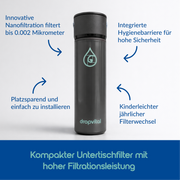
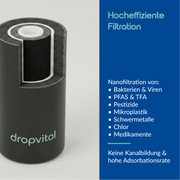
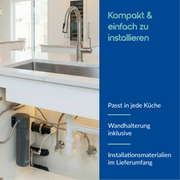
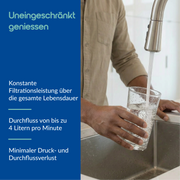
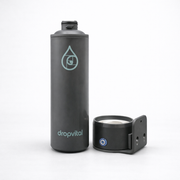
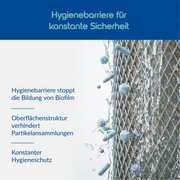

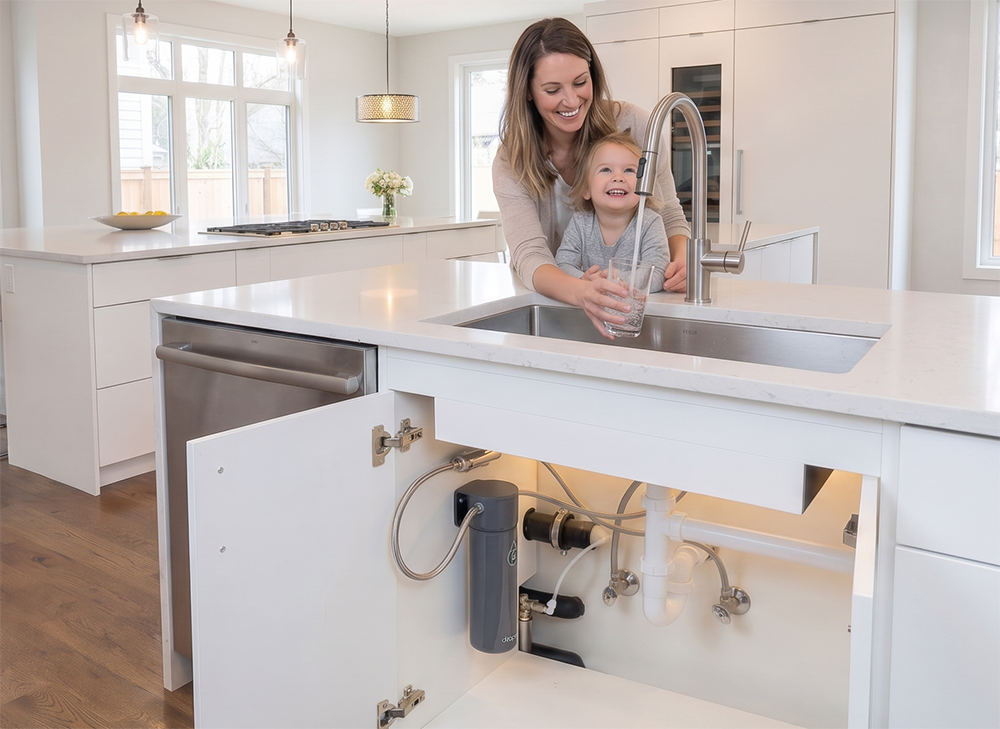
Mehr als guter Geschmack: Der nano-drink filtert bis zu 99 % der PFAS, Mikroplastik und Schwermetalle aus deinem Leitungswasser, ohne dabei die wichtigen Mineralien zu entfernen.


30-day money-back guarantee on all products (excluding installation and removal costs)
Delivery time: 2–4 business days
Free shipping within Germany, Austria, and Switzerland. Shipping to other EU countries is always subject to a fee.
2 Jahre Herstellergarantie
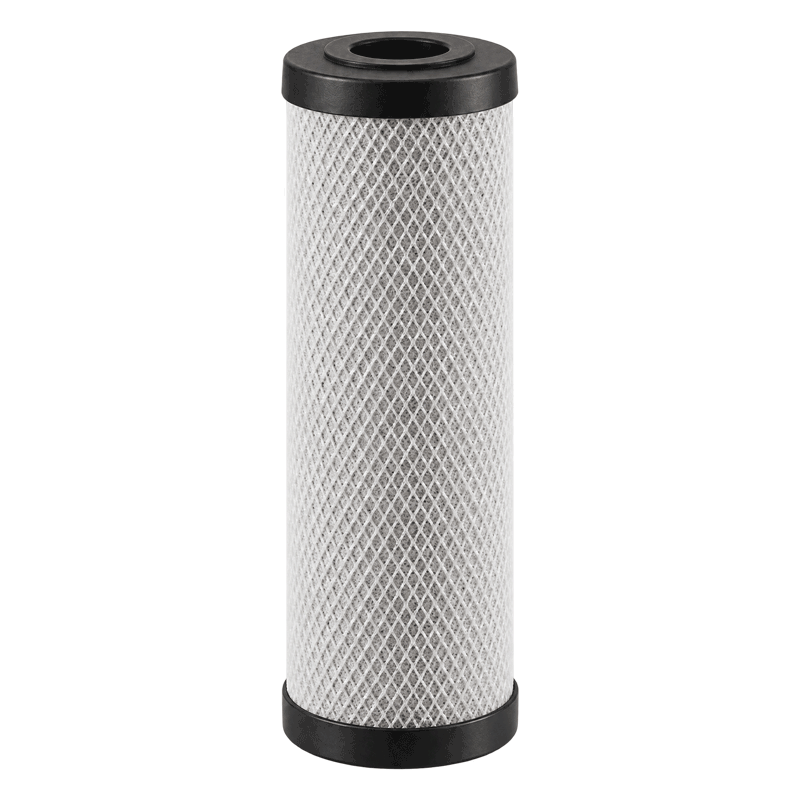
 Unterhalt: eine Kartusche im Jahr
Die Ersatzkartusche kostet 139 € und hält 10.000 Liter oder ein Jahr, das sind rund 11,60 € im Monat, für sauberes, sicheres Trinkwasser.
Der Wechsel geht ohne Werkzeug.


Selbstanschluss möglich
Frisch gefiltert beim Zapfen
Reicht für 10.000 Liter
Abschrauben und wieder anschliessen

Wasser zapfen statt Kisten schleppen. Einfach zapfen, statt Flaschen nachzukaufen oder eine Filterkanne nachzufüllen.

Die Aktivmembran filtert weit mehr als störenden Geschmack: von PFOS und PFOA bis zu Mikroplastik.
Ewigkeitschemikalien, in fast jeder Trinkwasserprobe nachweisbar
alte Rohre hinter dem Wasserzähler
Coliforme und Pseudomonas
Schwermetall aus Industrie und Umwelt


Die Filterfläche in einer Kartusche entspricht rund 603 Tennisfeldern.


Aktivkohlegranulat und Ionentauscher, vor allem gegen störenden Geschmack, Geruch und Kalk.
Mit jeder Nutzung lässt die Filterwirkung der Kartusche nach.
Verkeimt. Stiftung Warentest (07/2022) fand Keime in allen acht getesteten Kannenfiltern, in einem sogar Schimmel.
Mineralien werden entfernt
Aktivkohle als gepresster Block bindet Chlor, Geruch, Geschmack und Pestizide. Das Wasser sucht sich bevorzugte Wege und durchströmt den Block ungleichmässig, zudem verdeckt der Binder einen Teil der Poren. Gebundene Stoffe können wieder ins Wasser gelangen.
Je voller die Aktivkohle wird, desto stärker sinkt ihre Filterleistung.
Verkeimt. Aktivkohle ist organisch und wird im stehenden Wasser selbst zum Nährboden für Keime.
Mineralien bleiben erhalten
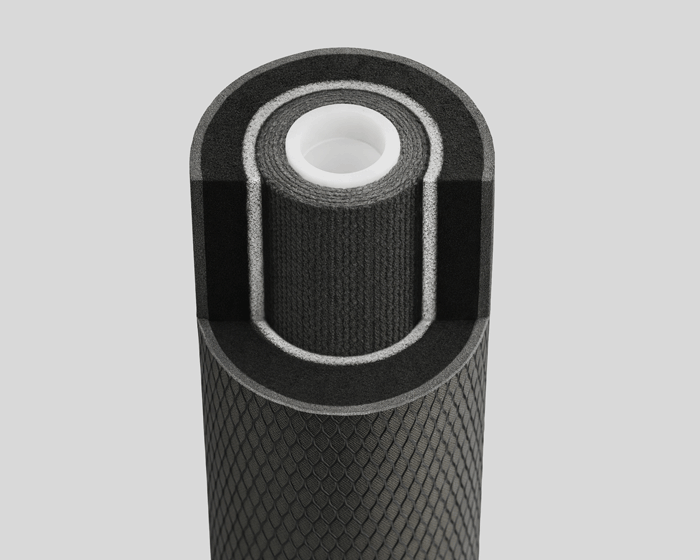
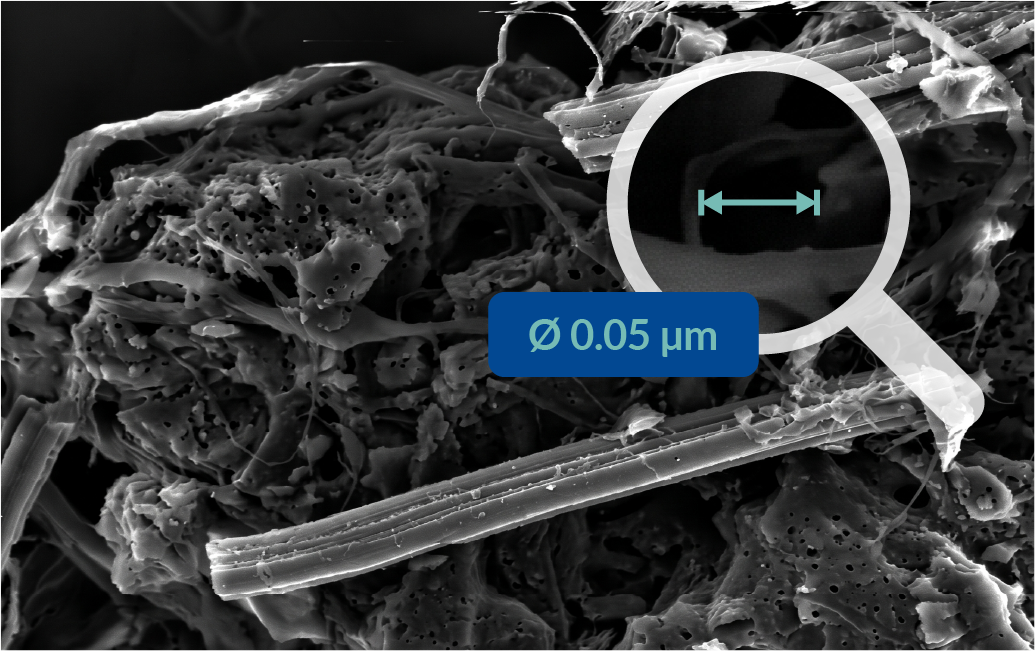
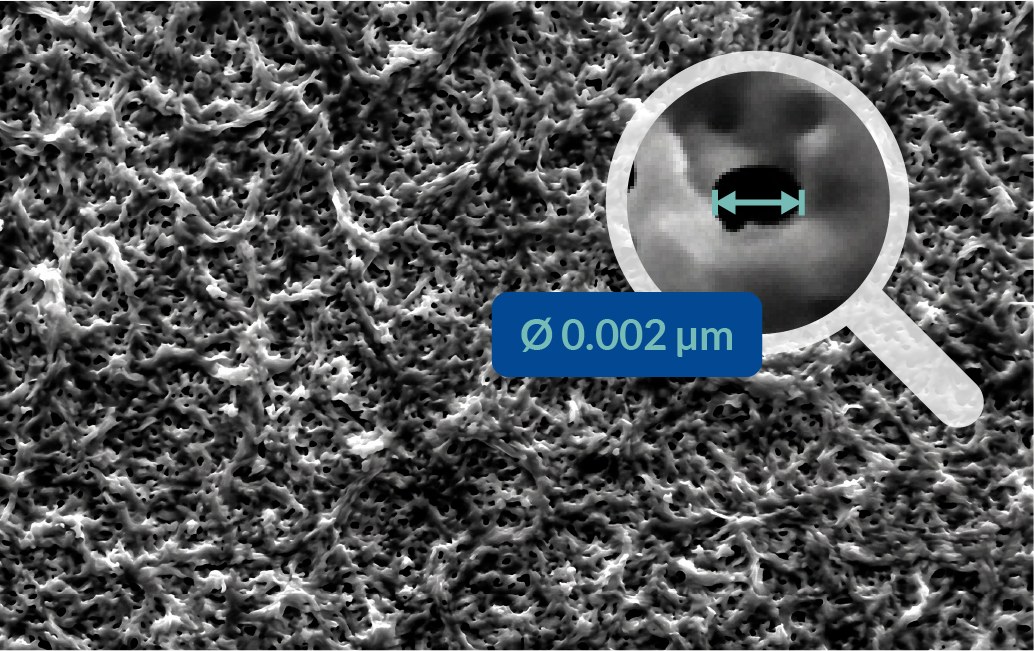
Nanoporöser Aktivfaser-Verbund statt Granulat oder Pulver. Die Fasern sind gleichmässig verteilt, sodass jeder Tropfen den ganzen Filter durchströmt. Ihre feinsten Poren liegen frei zugänglich an der Oberfläche und fangen Schadstoffe sofort im Vorbeifliessen ein, bis zu 99% gängiger Schadstoffe, zuverlässig bis zum Wechsel.
Konstante Leistung bis zum Wechsel, von SGS über 7.500 Liter geprüft.
Kann nicht verkeimen. Die Aktivmembran ist antibakteriell, Keime finden keinen Nährboden. Speziell dafür entwickelt.
Mineralien bleiben erhalten

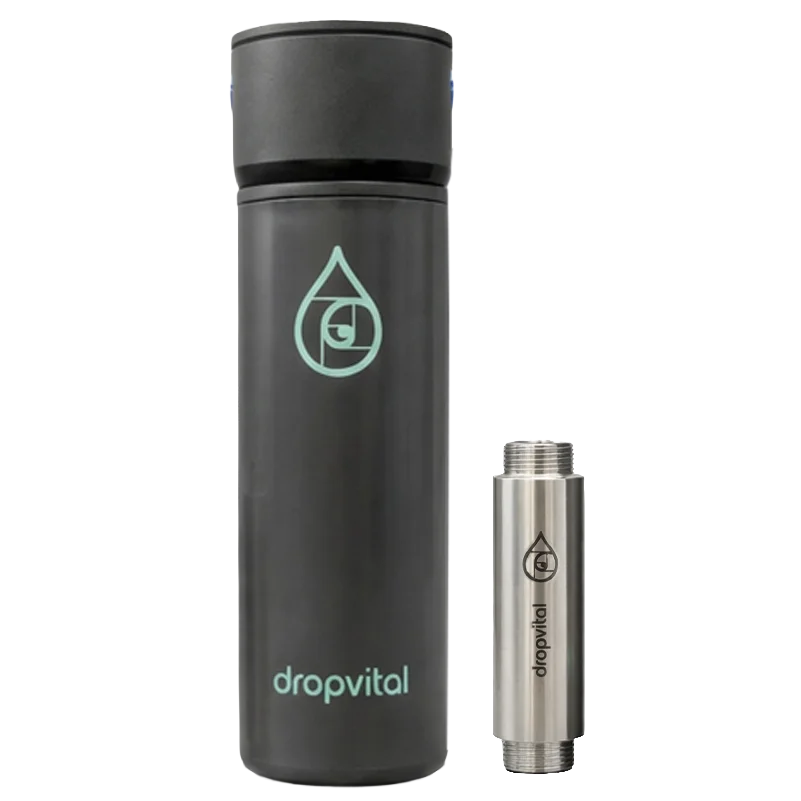
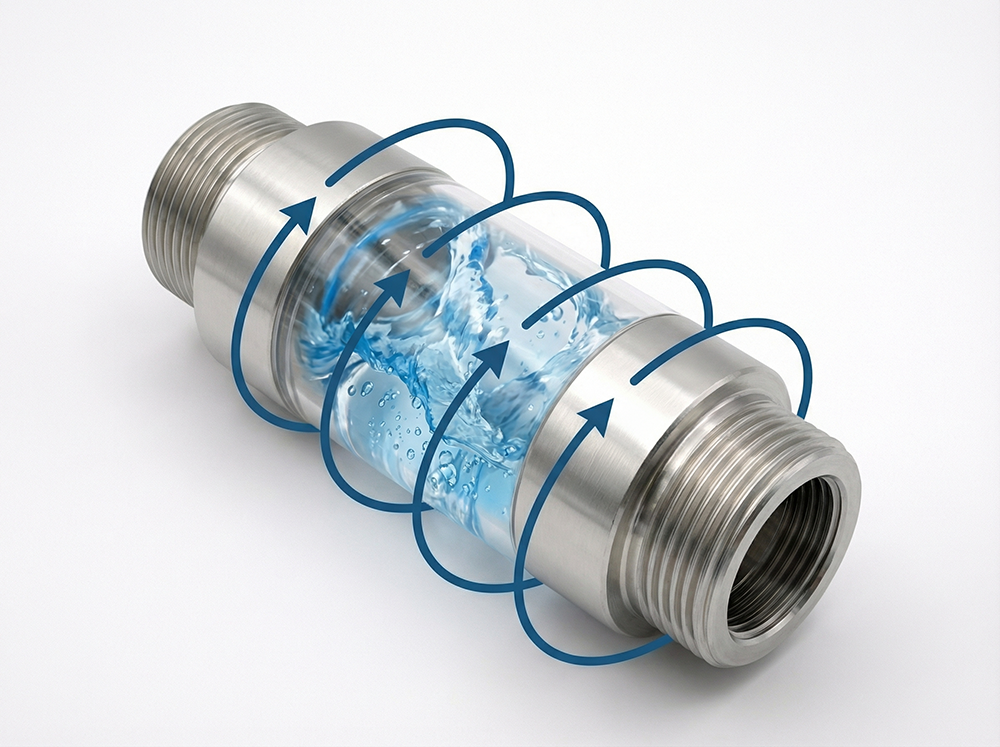
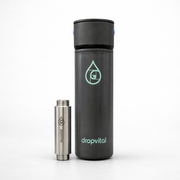
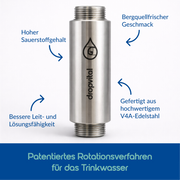
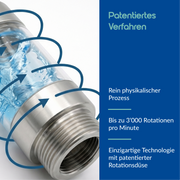
Der active-drink ergänzt die Trinkwasserfiltration um eine weitere Stufe. Während die Filtration unerwünschte Stoffe reduziert, setzt er am Verhalten des Wassers selbst an: eine präzise gesteuerte Strömungsführung versetzt das Wasser in Bewegung und unterstützt es in seiner natürlichen Dynamik, ohne die chemische Zusammensetzung zu verändern.
Diese gezielte Bewegung wirkt sich auf die sensorische Wahrnehmung aus. Das Wasser erscheint frischer und weicher, der Geschmack harmonischer und ausgewogener. Ein spürbares Plus an Qualität, direkt aus dem bestehenden Hahn.
Du kannst den active-drink gleich mitbestellen oder jederzeit später nachrüsten.
Wir wohnen im dritten Stock ohne Aufzug. Bisher jede Woche Wasser hochgetragen, inzwischen füllen wir unsere Flaschen einfach in der Küche. Hätte nicht gedacht, dass ich mich über einen Wasserfilter mal so freuen würde.
Grossartige Technologie, wirklich ausgezeichnet leckeres Wasser. Die Qualität der Anlagen ist überragend. Man merkt, dass grosse Ingenieurskunst und bewusste Menschen hinter diesem Unternehmen stehen.
Mein Mann war erst skeptisch und wollte weiter Flaschen kaufen. Jetzt nimmt er sich jeden Morgen eine Flasche mit Wasser aus der Küche mit 😄
Gleichmässig durchströmt. Stark bis zum Wechsel. Unsere mehrschichtige Aktivmembran liefert Filterleistung, die über Tausende Liter geprüft wurde.


Vom passenden Adapter bis zum Kartuschenwechsel: Bei uns sprichst du mit Menschen, die sich auskennen.
Unser Team sitzt im deutschsprachigen Raum und spricht deine Sprache. Wenn du anrufst, ist Nicole eine der ersten Stimmen, die du hörst. Ob Anschlussfrage oder Kartuschenwechsel, wir bleiben dran, bis es läuft.

Hinter dem Produkt stehen Menschen, die für Langlebigkeit, belegte Leistung und persönlichen Service einstehen.