Search

active-drink

Delivery time: 2–4 business days

Free shipping on orders of CHF 399 or more in Switzerland and EUR 599 or more in Germany; for orders below these amounts, a shipping fee of CHF 19 or EUR 19 applies; shipping to the EU is always subject to a fee

30-day money-back guarantee on all products (excluding installation and removal costs)

5-Year Manufacturer's Warranty

Would you like us to help you choose?

Would you like us to help you choose?

Noticeably weich and purified water for your drinking water

Noticeably weich and purified water for your drinking water

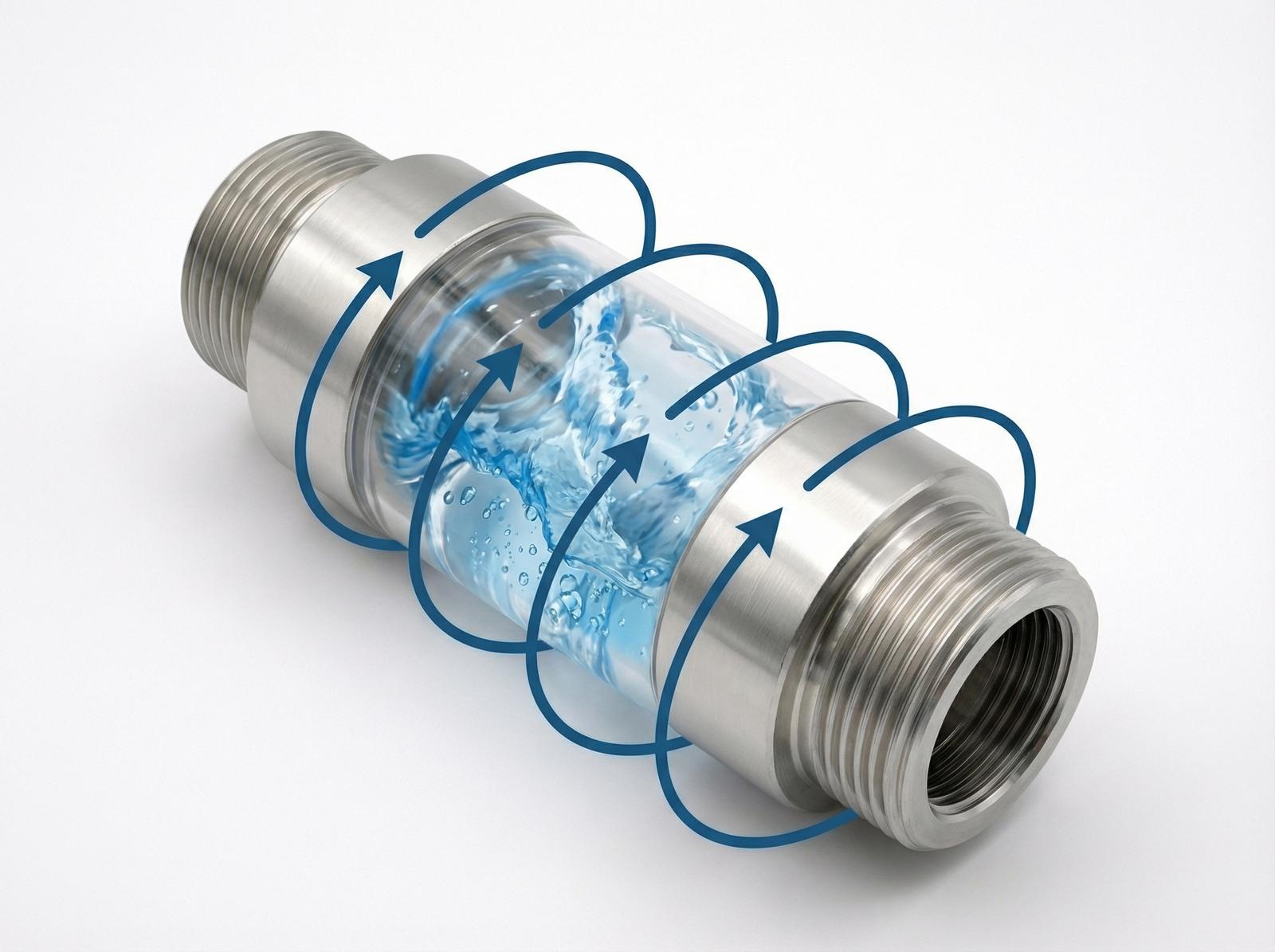
The active-drink enhances drinking water using a patented rotationsverfahren. In this process, a patented rotational nozzle sets the water in a controlled, dynamic motion of up to 3,000 revolutions per minute, which positively affects its structure and makes the water noticeably more pleasant to drink.

The active-drink enhances drinking water using a patented rotationsverfahren. In this process, a patented rotational nozzle sets the water in a controlled, dynamic motion of up to 3,000 revolutions per minute, which positively affects its structure and makes the water noticeably more pleasant to drink.

Patented Rotation Process

Patented Rotation Process

In the active-drink, the rotationsverfahren operates at a particularly high intensity of up to 3,000 rotations per minute.

This process is modeled after the natural flow mechanisms of a stream. The rotational forces generated in the process cause the water to reorganize itself

The process is purely physical and requires no electricity, additives, or chemical interventions whatsoever.

  • More oxygen in the water
  • A taste as fresh as mountain spring water

In the active-drink, the rotationsverfahren operates at a particularly high intensity of up to 3,000 rotations per minute.

This process is modeled after the natural flow mechanisms of a stream. The rotational forces generated in the process cause the water to reorganize itself

The process is purely physical and requires no electricity, additives, or chemical interventions whatsoever.

  • More oxygen in the water
  • A taste as fresh as mountain spring water

Highest-quality materials

Highest-quality materials

The active-drink is made of pure V4A stainless steel and is designed for maximum durability. The material is particularly resistant to corrosion and cavitation and is ideal for long-term use in domestic water systems.

  • 100% maintenance- and service-free
  • 5-year manufacturer’s warranty

The active-drink is made of pure V4A stainless steel and is designed for maximum durability. The material is particularly resistant to corrosion and cavitation and is ideal for long-term use in domestic water systems.

  • 100% maintenance- and service-free
  • 5-year manufacturer’s warranty

What's Included

What's Included

  • Complete active-drink
  • 3/4-inch external thread on both ends
  • Complete active-drink
  • 3/4-inch external thread on both ends

Technical Specifications

Technical Specifications

Here you will find detailed information about the technical features and specifications of this system.

Here you will find detailed information about the technical features and specifications of this system.

Frequently Asked Questions About active-drink

Dropvital active-drink is drinking water that is set in a dynamic rotational motion through physical water refinement. This process technically mimics the natural flow of a stream over a distance of approximately 30 kilometers. It is based on well-known hydrodynamic principles found in freely flowing bodies of water.

Through targeted rotation and flow guidance, the water acquires distinct flow dynamics. The chemical composition of the water remains completely unchanged. No minerals are added, nor are the pH value, hardness, or other chemical parameters affected.

Technological Approach

The physical enhancement is achieved through a precisely controlled flow system in which the water is set in rotation at high speed. This process generates a uniform, coherent movement of the water that is maintained for a certain period of time even after bottling, provided there is no renewed strong turbulence.

Unlike static methods or symbolic applications, dropvital active-drink is based on active flow dynamics. The simulation of a natural flow path serves to technically reproduce kinetic energy and flow order in the water.

Perception

Many people describe dropvital active-drink as having a particularly fresh, light, and lively mouthfeel. This perception is subjective and varies from person to person. It does not constitute a statement about health effects but refers exclusively to the sensory properties and the physical flow behavior of the water.

Clear Distinction

Dropvital active-drink is not a medical device or a dietary supplement. No claims are made regarding healing effects, therapeutic benefits, or health benefits. Statements regarding the naturalness or activity of the water refer exclusively to physical properties such as flow, movement, and dynamics.

Positioning

Dropvital active-drink is aimed at people who value high-quality water, modern engineering, and nature-inspired refinement. The focus is on purity, design, sensory experience, and a new way to consciously experience water—without chemical interventions and without medical claims.

Modern scientific research shows that water is not a static medium. Water molecules are in constant interaction via hydrogen bonds and are continuously reorganizing themselves. These temporary molecular arrangements are often described in the scientific literature as clusters or networks.

This dynamic is not an exception but a central characteristic of water. It influences fundamental physical properties such as flow behavior, solubility, and reaction kinetics.

Scientific Background

Studies using spectroscopic methods as well as molecular dynamics simulations confirm that water is a highly ordered yet extremely mobile system. The clusters described are not fixed structures, but rather snapshots within a continuous process.

It is precisely this constant reorganization that makes water a unique medium and explains why motion, flow, and energy input can measurably influence the behavior of water.

Context of Active Nanodrink

Dropvital Active Nanodrink builds on this scientific understanding and deliberately focuses on physical processes. Through controlled movement and flow dynamics, the water is brought into an active, dynamic state that is clearly distinct from still, static water.

The term “nano” refers to processes on the molecular and physical scale and does not describe any chemical change or the addition of substances. The chemical composition of the water remains unchanged.

Clear Distinction

Dropvital Active Nanodrink is neither a medical device nor a dietary supplement. No curative or therapeutic effects are promised. Statements regarding the activity or vitality of the water refer exclusively to physical properties such as movement, structure, and dynamics, as well as to sensory perceptions, which may vary from person to person.

Positioning

Active Nanodrink is aimed at people who want to experience water not just as a neutral beverage, but as a consciously designed element of their daily lives. The focus is on purity, modern technology, nature-inspired processes, and a high-quality drinking experience.

Pioneering Work: Warner (1970)

In his groundbreaking article “Structured Water in Biological Systems” (Annual Reports in Medicinal Chemistry), Warner demonstrated that water in biological systems adopts ordered patterns. These patterns interact directly with biomolecular processes and underscore how central this organization is to living systems. 

Fundamental Models: Frank (1970)

Another groundbreaking paper in *science* analyzed the molecular structure of water and demonstrated how water molecules can organize themselves into dynamic, structural networks. Frank thus laid the foundation for understanding the multidimensional nature of water as a chemical and physical medium. 

Structural Networks: Neidle et al. (1980)

This paper in *Nature* demonstrated highly structured water networks in DNA-dinucleoside complexes. These networks reveal how water interacts with biological macromolecules at the molecular level and supports their stability and functionality. 

Specific Molecular Clusters: Kristinailyte et al. (2017)

Using NMR and FTIR techniques, this study in the *Journal of Molecular Liquids* investigated the clustering of water molecules. It showed that water forms nanoscale structures that change dynamically under various conditions and exhibit specific properties.  

Response to electromagnetic fields: Montagnier et al. (2015)

Nobel laureate Luc Montagnier and colleagues demonstrated that water has the ability to receive electromagnetic signals and store them in specific molecular arrangements. These findings expand our understanding of the active role of water in biological processes. 

Interactions due to external stimuli: Gramatikov et al. (1992)

In the *Fresenius Journal of Analytical Chemistry*, researchers investigated how external factors such as temperature or chemical changes influence the molecular organization of water. These studies demonstrate that water actively responds to environmental conditions and dynamically adapts its molecular structure. 

Networks and nonpolar substances: Muller (1988)

A study published in the *Journal of Solution Chemistry* demonstrated how water organizes itself around nonpolar molecules. These observations highlight the complexity of water’s molecular interactions. 

Quantum Effects in Water: Del Giudice et al. (2005)

In *Electromagnetic Biology and Medicine*, the authors introduced a model of coherent quantum electrodynamics. They demonstrated that the molecular organization of water is shaped not only by classical mechanisms such as hydrogen bonding but also by quantum physical phenomena. 

Surface interactions: Tarov et al. (2005)

This study demonstrated how hydrophobic and hydrophilic surfaces influence the molecular structure of water. The authors documented that water forms ordered layers when in contact with such surfaces, layers that are unique in their function. 

Electrical Properties: Tychinsky (2011)

In a comprehensive analysis published in the *Water Journal*, it was demonstrated that water molecules in specific arrangements exhibit an exceptionally high electrical susceptibility, indicating an extended molecular order.  

Spectral signatures: Segarra-Martí et al. (2013)

This study in *Molecular Physics* showed that molecular water organization generates specific absorption and fluorescence spectra that serve as molecular “fingerprints.” This points to the precision of structural dynamics in water.

Supramolecular Architectures: Elia et al. (2016)

Through targeted external stimulation, these authors created supramolecular architectures in water, as reported in the *Water* journal. These structures exhibit high stability and complexity that go far beyond simple molecular bonds. 

Hydrogen-Rich Water Clusters: Ignatov et al. (2024)

A recent study in *Water* investigates cluster formation in hydrogen-rich water (HRW) using NMR and DFT analyses. The results demonstrate the formation of stable cluster structures, further supporting the molecular dynamics and potential medical applications of structured water.

Source for all studies cited:

 (Source: PDF “structured water”)

Hydrogen bonds are a central component of water’s structure and explain many of its well-known properties. Modern research shows, however, that they act in conjunction with other physical interactions, thereby enabling water’s unique dynamics and complexity.

In addition to hydrogen bonds, scientists consider the following influences, among others:

Van der Waals interactions

: These weak intermolecular forces contribute to the short-term stabilization of molecular arrangements and influence the spatial orientation of water molecules. They are a recognized component of physicochemical models used to describe collective effects in liquids.

Quantum physics approaches

Some theoretical studies, including models by Del Giudice and colleagues, investigate quantum physics effects as a complementary description of the molecular dynamics of water. These approaches extend classical models and are understood as part of an ongoing scientific discourse.

Electromagnetic influences

Research also addresses the question of how electromagnetic fields can influence the organization of water molecules. Such studies contribute to viewing water not only as a chemical substance but also as a physically responsive medium.

Surface

Interactions It is well established that hydrophilic and hydrophobic surfaces locally alter the arrangement of water molecules. Ordered structures emerge at interfaces that differ measurably from freely moving water and are relevant to many natural and technical processes.

Context and Significance

The research described above is based on recognized experimental methods such as spectroscopy, model calculations, and surface analyses. These studies consistently show that water is a dynamically organized system whose properties arise from the interplay of multiple physical forces.

This multidimensional perspective broadens the scientific understanding of water and explains why it plays a special role in biological, chemical, and technological contexts. It describes the adaptability and functionality of water without drawing any medical or therapeutic conclusions from it.

The growing interest in so-called structured water stems from an increasing awareness of just how central water is to biological processes. The human body consists largely of water, and a significant portion of it is found inside cells. In these highly organized environments, water is not isolated but is part of complex molecular interactions.

This observation gave rise to the idea that water might play a role not only chemically but also in terms of its physical organization. Terms such as “structured,” “hexagonal,” or “H3O2” water are used to describe this particular perspective on water.

Theoretical Foundations of the Concept

Proponents of structured water concepts assume that water molecules occasionally organize themselves into ordered arrangements and that movement, pressure, contact with surfaces, or natural flow can influence this organization. These considerations build on well-known physical properties of water, such as its dynamics, adaptability, and responsiveness to environmental conditions.

Connection to Nature and Spring Water

Structured water is often compared to natural spring water. Water that flows over long distances, comes into contact with rock, and is exposed to natural currents is often perceived as particularly fresh and vibrant. Such comparisons serve to illustrate natural processes in which movement and environmental influences shape the behavior of water.

This perception has contributed to many people taking a closer look at the quality and origin of their drinking water.

Popular Interpretations and Modern Lifestyles

The term “structured water” has also been adopted in the context of modern lifestyles, holistic approaches, and alternative ways of thinking. The focus here is less on medical effects and more on the conscious experience of water as a fundamental part of everyday life. Claims regarding detoxification, cellular health, or performance enhancement primarily reflect individual beliefs and are subject to varying scientific assessments.

Dropvital’s

Perspective Dropvital approaches the topic of structured water with an open yet responsible attitude. The focus is on physical properties such as the movement, dynamics, and purity of the water, as well as on high-quality, traceable refinement processes. Dropvital makes no claims regarding medical or therapeutic effects and understands terms such as “structure” or “activity” as descriptions of physical states and sensory perceptions.

Source:
Max Planck Institute (PDF)

Modern science does not describe water in biological systems as a random collection of individual molecules, but rather as a dynamic, locally organized medium. In human cells in particular, water in the immediate vicinity of biomolecules exhibits specific patterns of organization that are important for normal biological processes.

Ordered Layers of Water in Cells

In cells, water forms so-called hydration layers around proteins, DNA, and other large biomolecules. These water molecules are organized differently—both spatially and energetically—than freely moving water. Such structures are a well-studied component of biochemistry and support the stability, function, and interaction of biomolecular systems, for example in enzyme reactions or the structural organization of cellular components.

Context of Modern Research Approaches

Some research approaches, including the concept of so-called “exclusion zone water,” investigate how water organizes itself in particular ways near surfaces or interfaces. These models provide exciting insights into the physical properties of water in complex environments and are being researched and discussed internationally. They contribute to furthering our understanding of water as an active component of biological systems.

Significance of Dynamics

A defining characteristic of water in cells is its high mobility and adaptability. Ordered layers of water are not rigid but change continuously in response to their environment. It is precisely this dynamism that enables biological systems to respond flexibly to varying demands and to efficiently control processes.

Positive Interpretation

Scientific findings show that water plays a far more complex role in biological systems than has long been assumed. Its ability to organize itself locally while remaining highly dynamic makes water a central element of life. This perspective underscores the special significance of water without deriving any medical or therapeutic conclusions from it.

Dropvital’s

Approach Dropvital embraces this modern understanding of water as a dynamic and adaptable system. Terms such as “structure” or “organization” are understood here as descriptions of physical states and natural processes. Dropvital makes no claims regarding healing effects or health benefits and consciously prioritizes transparency and scientific rigor.

Summary

Research shows that water in human cells is locally organized and, at the same time, highly dynamic. These properties support fundamental biological processes and illustrate how versatile water is as a medium. In this sense, dropvital views water as a fascinating, living system whose complexity is increasingly being understood scientifically.

UV light is frequently used in water treatment to reduce microorganisms. It is a well-established method for ensuring water safety. At the same time, UV treatment is limited to this purpose and does not alter either the chemical composition or the physical dynamics of the water.

With active-drink, dropvital takes a deliberately different approach. The focus is not on treating the water with high-energy radiation, but rather on a gentle, physical refinement process modeled after natural movement and flow processes.

Focus

on Movement and Dynamics active-drink is based on the idea of viewing water not as a static medium, but as a dynamic system. Through targeted physical processes, the water is set into active, uniform motion. The chemical composition of the water remains completely unchanged in the process. No substances are added or removed.

This approach is modeled after natural flow processes, such as those found in freely moving water, and aims to shape the physical properties of the water in a particularly gentle manner.

Radiation-Free Approach

dropvital deliberately avoids the use of UV radiation in the refinement of active-drink. This eliminates high-energy interventions that go beyond mere hygiene. Instead, dropvital relies on transparent, reproducible physical principles such as movement, flow, and contact time.

Classification of Scientific Concepts

In research, water is increasingly described as a complex, reactive system whose properties depend heavily on movement and the environment. These findings form the conceptual basis of active-drink. However, dropvital does not derive any medical or therapeutic claims from them.

Clear Distinction

: active-drink is neither a medical device nor a dietary supplement. No claims are made regarding effects on cells, DNA, the immune system, or diseases. Statements regarding quality, activity, or naturalness refer exclusively to the physical properties and sensory perception of the water.

Summary:

Dropvital active-drink represents a modern, radiation-free water enhancement process that relies on physical movement rather than irradiation. The focus is on purity, dynamism, and a mindful approach to water—clear, transparent, and without any promises of medical efficacy.

No. When installed properly, the active-drink is completely service- and maintenance-free. If it is integrated into the cold water system in accordance with specifications and operated in conjunction with a suitable filtration system, neither regular maintenance nor replacement is required.

The active-drink operates purely on physical principles, contains no wear parts, and requires no consumables. As a result, it remains fully functional over the long term without the need for ongoing intervention.

The active-drink is integrated into the cold water system after a suitable filter system has been installed. Installation is quick and easy using push-in connections: Simply insert one hose into the inlet and another into the outlet of the active-drink.

No special tools are required. When installed properly, the active-drink can be easily integrated into existing systems.

Yes. The active-drink is designed so that it can be installed easily using the appropriate hose connectors, without requiring any special technical expertise. When connected properly to the existing cold-water system, you can easily install it yourself.

The physical treatment in the active-drink sets the water in motion with intense, uniform movement. This dynamic action increases the mixing of the water and can promote contact with the ambient air, especially as it flows from the waterhahn.

Under certain conditions, this can lead to a slightly increased concentration of dissolved oxygen in the water. Measured values may vary depending on water temperature, source water, and flow rate.

active-drink does not add oxygen to the water and does not alter its chemical composition. Any observed differences relate exclusively to physical properties such as movement, mixing, and gas solubility.

Note on Interpretation

: Information regarding dissolved oxygen refers to measurable physical parameters of the water. It does not imply any biological, health-related, or performance-related effects.

The physical dynamics of the water generated by active-drink are retained for a certain period of time after bottling, particularly when stored undisturbed in a closed container. How long these properties remain detectable depends on factors such as movement, temperature, and storage conditions.

Unlike purely static methods, active-drink is based on the active movement of the water, which allows its physical quality to be evident not only immediately within the system but also after bottling.

Due to its polar molecular structure and the formation of hydrogen bonds, water exhibits complex and dynamic behavior. In addition to hydrogen bonds, other physical forces—such as van der Waals and dipole-dipole interactions—are at work. These properties make water a system that continuously organizes and realigns itself at the molecular level.

For decades, scientific research has described so-called water clusters—temporary arrangements of several water molecules—that form under certain physical and chemical conditions.

Scientific Evidence and Methods

The existence and behavior of water clusters have been investigated using established experimental and theoretical methods:

Oka et al. (2019) demonstrated in a hydrophobic environment that signals from water clusters remain detectable for up to three days.

Kulkarni (2021) used density functional theory (DFT) to analyze the stability of water clusters as a function of the number of hydrogen bonds.

• Kristinaityte et al. (2017) investigated dimer, tetramer, and hexamer water clusters using nuclear magnetic resonance (NMR) and infrared spectroscopy (FTIR).

Sun et al. (2017) and Yang et al. (2020) demonstrated that NMR-based parameters allow conclusions to be drawn about the number of water molecules and hydrogen bonds in water clusters.

These studies confirm that water can form preferred molecular arrangements without these being permanently fixed structures.

Cluster Sizes and Molecular Organization

The scientific literature describes clusters consisting of two, three, four, and more water molecules. Configurations with six molecules are particularly frequently modeled as energetically favorable. In addition, larger arrangements with up to 30 water molecules have been observed, representing combinations of hexagonal and smaller structures.

Influence of Minerals and Ions

The local organization of water is also influenced by dissolved ions:

• Water clusters around calcium ions have been studied by Kochanski & Constantin (1987), Watanabe & Iwata (1997), and Ariyarathna & Miliordos (2020), among others.

• Cluster formation involving magnesium ions was described by Delgado, Sethio & Kraka (2021).

Wang et al. (2023) analyzed water clusters in association with zinc ions (Zn²⁺).

These studies show that stable hydrate shells composed of water molecules can form around metal ions, as is typical for natural drinking water.

Influence of External Fields

External physical influences were also investigated:

Chang & Weng (2006) showed that the number of hydrogen bonds increases when exposed to constant magnetic fields between 1 and 10 tesla.

Gao et al. (2021) demonstrated using molecular dynamics simulations that changes in the cluster structure can be maintained over time. The analysis was performed using hierarchical clustering methods.

Conclusion

The studies cited demonstrate that water forms temporarily organized molecular structures under certain conditions. These structures are dynamic, environment-dependent, and part of a constantly readjusting equilibrium. No conclusions regarding permanently fixed water structures or specific health effects can be drawn from this.

Context at dropvital

Dropvital refers to these scientific findings as an expression of a modern physical understanding of water. The term “structured water” is used here as a simplified description of complex molecular dynamics. Dropvital makes no medical or therapeutic claims and does not derive any health claims from the studies mentioned.

Dropvital’s treated water undergoes purely physical treatment. Its chemical composition remains unchanged; no substances are added or removed. In principle, it is therefore also suitable for babies and toddlers, provided that the source drinking water meets the usual quality standards.

In scientific and technical literature, water in the human body is often described as having a particularly ordered structure. For example, the book *The Water Puzzle and the Hexagonal Key* posits that water in biological systems—particularly in newborns—exists predominantly in ordered molecular arrangements. This description serves to illustrate the biological organization of water and does not constitute a medically recognized standard or recommendation.

Dropvital incorporates such perspectives as part of a broader understanding of water, without drawing conclusions about health effects or benefits from them. Statements regarding babies and toddlers refer exclusively to the physical integrity and tolerability of the water, not to promises regarding development, health, or vitality.

As with all drinking water for infants, the following applies: In cases of specific health concerns or when preparing baby food, the general recommendations of healthcare professionals should be followed.

Discover the world of dropvital